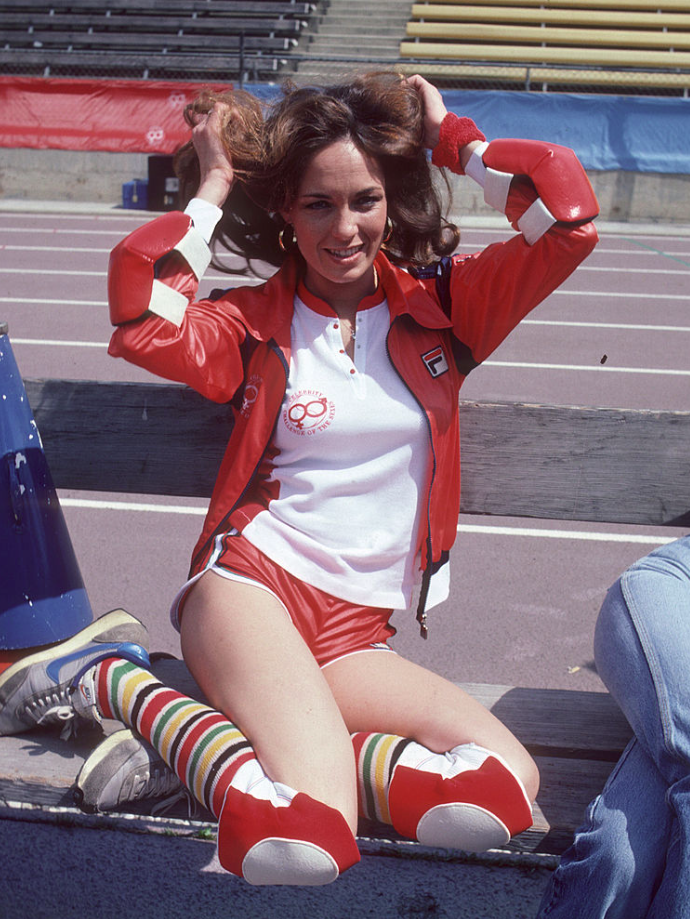
The Dukes of Hazzard became one of the most recognizable television series of its generation, attracting millions of viewers with fast cars, spectacular stunts, memorable characters, and the instantly recognizable General Lee. The show combined action, comedy, and Southern-style adventure in a way that made it a favorite for audiences throughout the late 1970s and 1980s. Yet, beneath all the excitement, the series was also filled with bloopers, continuity mistakes, production shortcuts, and fascinating behind-the-scenes details that observant fans continue to notice.
Like many television classics, The Dukes of Hazzard was far from perfect. Viewers with sharp eyes can sometimes spot differences between scenes, especially during the show’s many car chases. Vehicles might suddenly appear with different levels of damage, change position between shots, or seem to recover from an accident faster than they should. Considering how many jumps, crashes, and high-speed sequences were filmed, keeping every detail perfectly consistent was undoubtedly a difficult task.
Some mistakes were even easier to overlook because the action moved so quickly. During dramatic chase sequences, cameras frequently switched between different angles and locations, creating the illusion of one continuous event. However, when fans pause the footage or watch the scenes repeatedly, small inconsistencies can become surprisingly obvious. These errors may not have mattered to viewers when the episodes first aired, but today they have become part of the fun of revisiting the series.
The show’s ambitious stunt work created plenty of opportunities for unexpected moments. The production depended heavily on practical effects, real vehicles, stunt performers, and carefully coordinated driving sequences. Instead of relying primarily on modern digital effects, the series created excitement through physical stunts that looked immediate and dangerous. That approach gave The Dukes of Hazzard much of its distinctive personality and helped make the General Lee one of television’s most famous vehicles.
Of course, the cars were only part of the show’s appeal. The series featured a colorful collection of characters whose personalities helped make Hazzard County feel like a world of its own. Bo and Luke Duke became known for their rebellious spirit, clever escapes, and impressive driving skills, while Uncle Jesse provided wisdom and stability. Sheriff Rosco P. Coltrane added another layer of comedy with his exaggerated personality and endless attempts to catch the Duke boys.
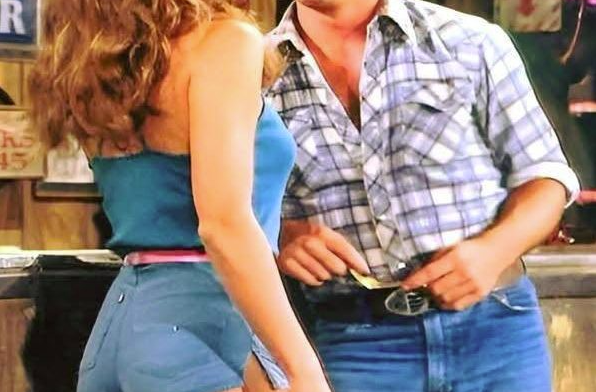
Daisy Duke was another character who became impossible to forget. Played by Catherine Bach, Daisy quickly became a major fan favorite and eventually became a pop-culture icon. Her famous denim shorts were so closely connected with the character that the style became widely known as “Daisy Dukes.” What began as part of a television costume ultimately became a recognizable fashion term that remains familiar decades later.
Another fascinating aspect of the series was its straightforward storytelling. The Dukes of Hazzard did not depend on complicated plots or heavy drama. Instead, episodes often revolved around simple conflicts, daring escapes, outrageous schemes, and entertaining car chases. That simplicity was a major part of its appeal. Viewers could easily follow the story while enjoying the humor, action, and personalities that made each episode distinctive.
The General Lee itself became almost a character in its own right. Its orange paint, distinctive appearance, and spectacular jumps made it one of the most recognizable cars in television history. The vehicle became closely associated with the show’s identity, and its famous stunts remain some of the scenes fans remember most clearly.
Behind the scenes, creating those moments required considerable effort. Multiple vehicles were used during production, particularly because the cars involved in major stunts could suffer significant damage. This helps explain why careful viewers may notice differences between vehicles from one scene to another. What appears to be the same car on screen could sometimes be a different production vehicle used to complete another part of the sequence.
Ultimately, the imperfections are part of what makes The Dukes of Hazzard so entertaining to revisit. Bloopers, continuity errors, unusual stunt details, and production secrets give longtime fans another reason to watch familiar episodes with fresh eyes. Instead of diminishing the show’s legacy, these little mistakes often add to its nostalgic charm.
Decades after its original run, The Dukes of Hazzard remains memorable because of its unique combination of comedy, action, practical stunts, colorful characters, and unforgettable vehicles. Whether viewers are watching for the exciting car jumps, laughing at the characters, remembering Daisy Duke, or searching for hidden mistakes, there is always something new to notice. Those imperfections have become part of the show’s enduring personality—and they continue to give fans plenty of reasons to watch, laugh, and look a little closer.
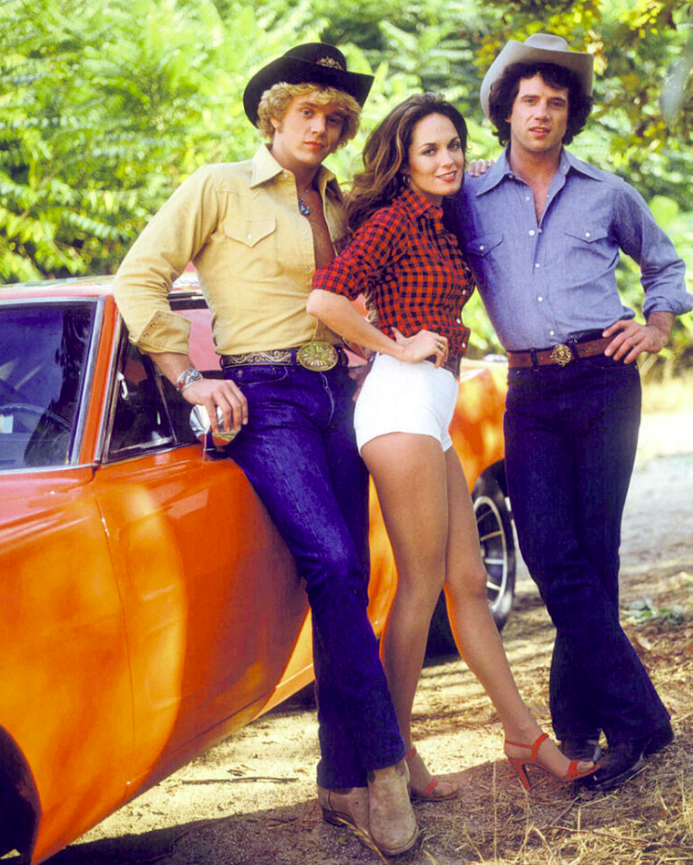
Getty Images
For an entire generation of television viewers, The Dukes of Hazzard was far more than another weekly series. It became a cultural phenomenon that turned Friday nights into a familiar ritual. Fans would settle in front of the television, ready to follow Bo and Luke Duke as they raced through Hazzard County in the legendary General Lee, escaping trouble and getting themselves into another outrageous adventure.
For many viewers, Daisy Duke was an equally important part of the show’s appeal. Played by Catherine Bach, she quickly became one of the series’ most recognizable faces. Her image became so popular that posters of her could be found on bedroom walls alongside other famous stars of the era, including Farrah Fawcett. Daisy wasn’t simply a supporting character; she became a pop-culture icon whose name and style eventually became familiar far beyond the show itself.
What made The Dukes of Hazzard special was the way it brought together action, comedy, colorful characters, and simple storytelling. The series didn’t require viewers to remember complicated storylines or follow a long chain of dramatic events. Each episode offered a new problem, a new scheme, and usually a spectacular chase or stunt before the credits rolled.
For many fans, watching the show became part of growing up. Summer afternoons might be spent outside riding bicycles, playing with friends, or enjoying the sunshine, followed by the excitement of getting home in time for the evening’s television lineup. At a time when audiences had far fewer entertainment choices than they do today, a popular television show could become a shared experience for families, friends, and entire communities.
The General Lee was at the center of that experience. With its bright orange body, distinctive styling, and unforgettable jumps, the Dodge Charger became one of the most famous television cars ever created. Whenever Bo and Luke climbed inside, viewers knew that another wild escape was probably moments away. The car wasn’t merely transportation for the characters—it became one of the defining symbols of the series.
The show’s memorable cast also played a major role in its success. John Schneider and Tom Wopat brought energy and charm to Bo and Luke Duke, while Denver Pyle gave Uncle Jesse a warm, wise, and dependable personality. Catherine Bach turned Daisy Duke into an unforgettable character, and James Best’s Sheriff Rosco P. Coltrane provided much of the show’s comic energy.
Then there was Boss Hogg, played brilliantly by Sorrell Booke.
Sorrell Booke’s Surprising Contract
Sorrell Booke’s portrayal of Jefferson Davis “J.D.” Hogg was one of the most entertaining elements of The Dukes of Hazzard. Boss Hogg was greedy, ambitious, scheming, and constantly looking for ways to outsmart the Duke family. Yet despite his questionable behavior, the character was generally presented in a humorous and exaggerated way rather than as a genuinely frightening villain.
One particularly interesting detail associated with Booke’s contract was a restriction concerning the kinds of crimes Boss Hogg could commit. According to accounts about the production, the character was not supposed to become involved in drug dealing or murder. That limitation may seem surprising when considering how often Boss Hogg found himself involved in questionable schemes, but it reflected the overall tone that the series wanted to maintain.
The Dukes of Hazzard was designed primarily as entertaining television rather than a dark crime drama. Its villains could be dishonest and its situations could become dangerous, but the stories generally remained playful, exaggerated, and suitable for a broad family audience. Boss Hogg could scheme, cheat, manipulate situations, and create headaches for the Duke boys, but there were boundaries that kept the character from becoming truly sinister.
[8/18/2026 10:37 AM] Thlang Narith: That balance was one of the reasons Sorrell Booke’s performance worked so well. Instead of playing Boss Hogg as a purely evil villain, Booke gave him a larger-than-life personality. His exaggerated reactions, distinctive voice, physical comedy, and constant frustration made him entertaining even when he was causing trouble.
In many ways, Boss Hogg became one of those television villains audiences loved to hate. Viewers could laugh at his plans while still understanding that he was usually going to get himself into trouble. His relationship with Rosco added another layer of comedy, particularly when their schemes became more complicated than necessary.
Booke’s acting helped transform what could have been a one-dimensional antagonist into one of the show’s most memorable personalities. His chemistry with the rest of the cast made Boss Hogg feel like an essential part of Hazzard County rather than simply someone who appeared whenever the story needed a villain.
And while awards may not have fully recognized his contribution, many longtime viewers continue to believe that Booke deserved more industry attention for the performance. Playing comedy effectively is often more difficult than it appears, especially when a character has to remain funny without becoming completely unbelievable. Booke managed to make Boss Hogg exaggerated enough for the show’s world while still giving him a recognizable personality.
Why the Show Still Inspires Nostalgia
Part of the enduring appeal of The Dukes of Hazzard comes from the memories surrounding it. Television from that era was experienced differently. Families often watched the same programs together, and popular shows became shared cultural references. There was no need to search through endless streaming menus or worry about missing dozens of episodes because viewers could simply gather around the television and enjoy the latest adventure.
That simplicity helped make the series memorable.
The show offered fast cars, dramatic jumps, humor, friendship, and characters who were easy to recognize. Even the familiar opening moments could create excitement because viewers immediately knew they were about to spend another half-hour in Hazzard County.
Looking back today, fans may notice things they missed when they were younger. They may spot continuity mistakes, recognize familiar stunt vehicles, or appreciate the performances in a completely different way. What once seemed like straightforward entertainment can now feel like a time capsule from another era of television.
That may be the real magic of The Dukes of Hazzard. It wasn’t perfect, but it didn’t need to be. Its charm came from its energy, personality, humor, and larger-than-life presentation.
For those who grew up watching Bo, Luke, Daisy, Uncle Jesse, Rosco, and Boss Hogg, the series can bring back memories of a simpler time almost instantly. The roar of the General Lee, the sound of a chase beginning, and the sight of familiar characters returning for another adventure are enough to transport longtime viewers back to those Friday nights.
Decades later, The Dukes of Hazzard remains a nostalgic favorite because it captured something that is difficult to recreate: the feeling of gathering around the television and simply enjoying the ride. From Daisy Duke’s unforgettable popularity to Sorrell Booke’s brilliant performance as Boss Hogg, every part of the series contributed to its lasting place in television history.
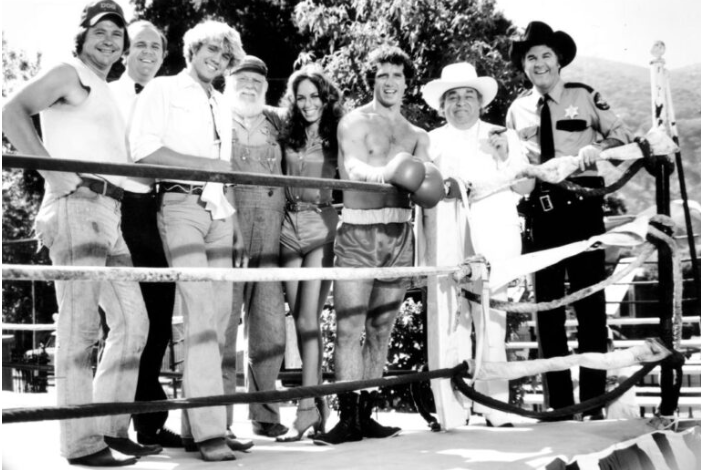
Getty Images
The Dukes of Hazzard remains one of the most recognizable television shows of its era, remembered for its fast cars, outrageous stunts, colorful characters, and unforgettable Southern-style adventures. While millions of viewers tuned in to watch Bo and Luke Duke race through Hazzard County in the General Lee, there was plenty happening behind the scenes that audiences never saw.
From clever acting tricks and unusual audition stories to the unexpected origins of the General Lee’s famous horn and the creation of Daisy Duke’s legendary look, the production was filled with fascinating details. Some of these stories reveal just how much effort the cast and crew put into making the series entertaining, while others show how a little improvisation or luck can create something that becomes television history.
Here are some of the most interesting stories and behind-the-scenes details associated with The Dukes of Hazzard.
Sorrell Booke’s Secret Padding for Boss Hogg
One of the most memorable personalities in Hazzard County was Jefferson Davis “J.D.” Hogg, better known as Boss Hogg. Played by Sorrell Booke, the character was the wealthy, scheming, and often comically corrupt boss who was constantly looking for ways to outsmart the Duke family.
Boss Hogg’s appearance was almost as distinctive as his personality. He was usually seen wearing an immaculate white suit, white hat, and plenty of jewelry, creating an exaggerated image that immediately separated him from the rest of the characters.
But Sorrell Booke reportedly used padding underneath his clothing to make Boss Hogg appear larger and rounder than Booke actually was. The extra padding helped create the exaggerated silhouette associated with the character and contributed to the visual comedy of his performance.
It might sound like a small detail, but costume and physical appearance were extremely important to the show’s comedic style. Boss Hogg wasn’t supposed to look like an ordinary small-town businessman. Everything about him was larger than life, from his wardrobe to his mannerisms.
Booke embraced that approach completely.
His performance relied heavily on facial expressions, body language, exaggerated movements, and comic timing. The added padding became another part of the transformation, helping audiences immediately recognize Boss Hogg whenever he appeared on screen.
What made the performance particularly effective was that Booke never seemed embarrassed about playing such an exaggerated character. Instead, he leaned into the humor. Boss Hogg could be greedy and dishonest, but he was rarely presented as a genuinely terrifying villain. His schemes were usually exaggerated enough to keep the show firmly in the realm of comedy and adventure.
That balance helped make him one of the most entertaining characters on the series.
The Surprising Story Behind General Lee’s “Dixie” Horn
Few sounds are more closely associated with The Dukes of Hazzard than the familiar opening notes of “Dixie” coming from the General Lee’s horn.
Whenever the orange Dodge Charger appeared during a chase, that distinctive musical blast immediately signaled that something exciting was about to happen. Over time, the horn became almost as recognizable as the car itself.
But the story behind the horn is surprisingly unusual.
According to the well-known production story, the horn wasn’t originally part of the show’s master plan. During the early production period in Georgia, members of the production team reportedly heard a vehicle driving by with a horn playing the familiar “Dixie” melody.
The sound immediately caught their attention.
Instead of simply ignoring it, they became interested in finding out where the horn came from. The production team tracked down the vehicle and ultimately acquired the horn for use on the show.
The funny part is that the same type of horn could reportedly have been obtained much more cheaply elsewhere. In other words, the production may have paid significantly more than necessary simply because the sound happened to catch their attention at exactly the right moment.
That accidental discovery turned into one of the most recognizable audio signatures in television history.
There is another interesting detail concerning the production of the horn sound. During the show’s early episodes, practical filming conditions meant that the horn was not always handled in exactly the same way it was later in the series. As production moved and the show became more established, the familiar sound could be incorporated during post-production.
That was a practical solution for a television series that involved complicated action sequences. The filmmakers could focus on capturing the cars, actors, and stunts and then add specific sound effects later.
Today, the “Dixie” horn is inseparable from the General Lee. It is difficult to imagine the car appearing on screen without that famous sound.
What began as an unexpected discovery became one of the show’s defining trademarks.
John Schneider and the Audition That Changed Everything
John Schneider became famous for playing Bo Duke, one half of the Duke cousins at the center of the series. His performance helped establish Bo as energetic, confident, mischievous, and fearless behind the wheel.
But Schneider’s path to the role was anything but conventional.
When he auditioned for The Dukes of Hazzard, he was remarkably young. Schneider later discussed how he presented himself as older than he really was in an effort to convince producers that he was right for the part.
According to Schneider’s own recollections, he told producers that he was 24 even though he was actually only 18.
For a young actor trying to land a major television role, that was a bold move.
He also understood that simply showing up for an audition wasn’t enough. He needed to convince the producers that he could embody the personality they were looking for. Schneider reportedly arrived dressed casually in jeans and a T-shirt and carried a six-pack of beer, creating the impression of a young Southern character rather than a teenager from New York City.
He also adopted a Southern accent for the audition.
The contrast was striking.
Schneider was a young actor from New York, yet he managed to convince the people making the show that he could convincingly play Bo Duke. His confidence and willingness to commit to the character apparently made a strong impression.
The gamble paid off.
Schneider was cast as Bo, and the role became one of the defining parts of his career. His chemistry with Tom Wopat, who played Luke Duke, became one of the foundations of the series.
The two actors developed the easygoing relationship that audiences expected from cousins who had grown up together. Their playful arguments, teamwork, and shared sense of adventure helped make the Duke boys believable as a pair.
Schneider’s audition story is a reminder of just how much determination can matter when an actor is trying to break into the entertainment business.
He didn’t simply walk into the audition and hope for the best. He created a character before he even had the job.
The Georgia School of High Performance Driving
One of the funniest stories surrounding Schneider’s audition involves his claimed driving experience.
To strengthen his case for playing Bo Duke, Schneider reportedly told producers that he had graduated from the “Georgia School of High Performance Driving.”
There was just one problem.
The school didn’t exist.
Schneider later joked about the story in interviews, explaining that he had essentially invented the name because he believed producers needed to hear that he knew how to drive.
The claim was bold, but there was an important element of truth behind the performance: Schneider did have natural driving ability.
[8/18/2026 10:40 AM] Thlang Narith: Once he became part of the show, his comfort behind the wheel became obvious. Bo Duke was supposed to be an accomplished driver, and Schneider needed to make the character look believable whenever he was behind the wheel of the General Lee.
He learned how to handle the vehicle and perform controlled driving maneuvers used in the series.
However, there was an important distinction between skilled driving and the extreme stunts featured on the show.
The massive jumps and dangerous crashes required professional stunt performers and carefully planned production work. A television set was not the place to allow an inexperienced actor to attempt a potentially life-threatening stunt simply because the character was supposed to be a good driver.
Schneider could perform many driving sequences, but the most dangerous work was left to trained stunt professionals.
That division between actors and stunt performers was essential to the production. The Dukes of Hazzard became famous for its spectacular vehicle sequences, but those scenes required considerable planning, specialized equipment, and experienced professionals.
How Daisy Duke Created a Fashion Phenomenon
If the General Lee became the show’s most famous vehicle, Daisy Duke became its most recognizable fashion icon.
Catherine Bach played Daisy Duke, the confident and stylish cousin of Bo and Luke. From the beginning, Daisy was designed to stand out, but her wardrobe ultimately became far more influential than anyone could have predicted.
Her short denim shorts became so strongly associated with the character that they eventually became known as “Daisy Dukes.”
Today, the term is widely understood as a reference to very short denim shorts. But when Catherine Bach first appeared in the outfit on television, the look was considered quite daring for network television.
The story of how the costume came together is particularly interesting.
Bach reportedly wanted Daisy to have a distinctive, youthful, and attractive appearance. Rather than giving her a conventional television wardrobe, the costume department developed a look that included denim shorts, boots, and other casual pieces that fit the character’s personality.
The shorts attracted immediate attention.
Network executives were reportedly concerned that the outfit was too revealing and wanted additional coverage. One solution was for Bach to wear pantyhose underneath the shorts.
The intention was to make the costume more acceptable for television.
Instead, the look became even more memorable.
The combination of the denim shorts and pantyhose became a defining part of Daisy’s appearance, and Bach quickly became one of the most recognizable television personalities of the period.
The popularity of the character extended far beyond the show itself.
Daisy Duke became a fashion reference, a poster icon, and a recognizable part of 1980s pop culture. The name eventually became attached to the style itself, demonstrating just how powerful a television character can be when an image connects with audiences.
Daisy Duke Was More Than a Costume
Although the shorts became the most famous part of Daisy’s image, Catherine Bach’s contribution to the series went well beyond her wardrobe.
Daisy was an important member of the Duke family and frequently played a role in helping Bo and Luke. She was clever, confident, resourceful, and capable of handling difficult situations herself.
Her character also helped provide a different type of energy within the show. While Bo and Luke were usually involved in driving and physical action, Daisy often became involved in situations that required charm, intelligence, or quick thinking.
Bach’s performance made Daisy more memorable than a simple television stereotype.
That is one reason the character remained popular long after the original series ended.
The Magic Was in the Combination
The success of The Dukes of Hazzard didn’t come from one character or one stunt. It was the result of many elements coming together.
There were the Duke boys and their chemistry. There was Daisy and her unforgettable style. There was Uncle Jesse with his wisdom and warmth. There was Boss Hogg with his endless schemes. Sheriff Rosco added another dose of comedy, while the General Lee provided the action.
And then there were the stunts.
The series became famous for spectacular car jumps that would be difficult to reproduce even with today’s technology. At the time, these sequences helped give the show an energy that separated it from many other television programs.
The production also understood the importance of memorable details.
The General Lee had its distinctive orange color. The horn had its signature sound. Daisy had her famous shorts. Boss Hogg had his exaggerated appearance. Bo and Luke had their recognizable personalities.
Every detail contributed to the identity of the show.
Why These Stories Still Matter
Part of the fun of revisiting The Dukes of Hazzard decades later is discovering how much work and creativity went into creating something that often looked effortless on screen.
A costume choice could become a fashion phenomenon.
An unusual horn could become a television trademark.
A young actor’s exaggerated audition story could lead to a decades-long career.
Padding underneath a suit could help transform an actor into one of television’s most recognizable comic villains.
These details remind us that successful television isn’t created only by scripts and cameras. It also comes from the decisions made by actors, costume designers, stunt performers, directors, editors, and countless other people working behind the scenes.
The Dukes of Hazzard had its share of imperfections, production shortcuts, continuity errors, and unusual stories. But those imperfections are part of its charm. Fans can revisit old episodes and notice things they missed the first time, whether it’s a stunt detail, a costume choice, a familiar vehicle, or a performance that seems even funnier with the passage of time.
Most importantly, the show created characters and images that became larger than the series itself.
Boss Hogg’s white suit and exaggerated personality remain instantly recognizable. The General Lee’s orange body and famous horn became television trademarks. Bo Duke established John Schneider as a household name, while Catherine Bach’s portrayal of Daisy Duke inspired a fashion term that remains familiar today.
That is the lasting legacy of The Dukes of Hazzard.
It wasn’t simply a show about two cousins driving a fast car around Hazzard County. It was a carefully assembled mixture of comedy, action, personality, music, costumes, and practical stunts that captured the imagination of millions.
And behind every memorable moment was a story of its own.
Sometimes it involved a little padding.
Sometimes it involved an unexpectedly expensive horn.
Sometimes it involved an ambitious young actor stretching the truth during an audition.
And sometimes, as in the case of Daisy Duke, a simple costume decision could become part of pop-culture history.
Those stories are exactly what make classic television so fascinating. Long after the original episodes have ended, fans can continue discovering new details, sharing old memories, and looking back at the people and moments that made the series unforgettable..
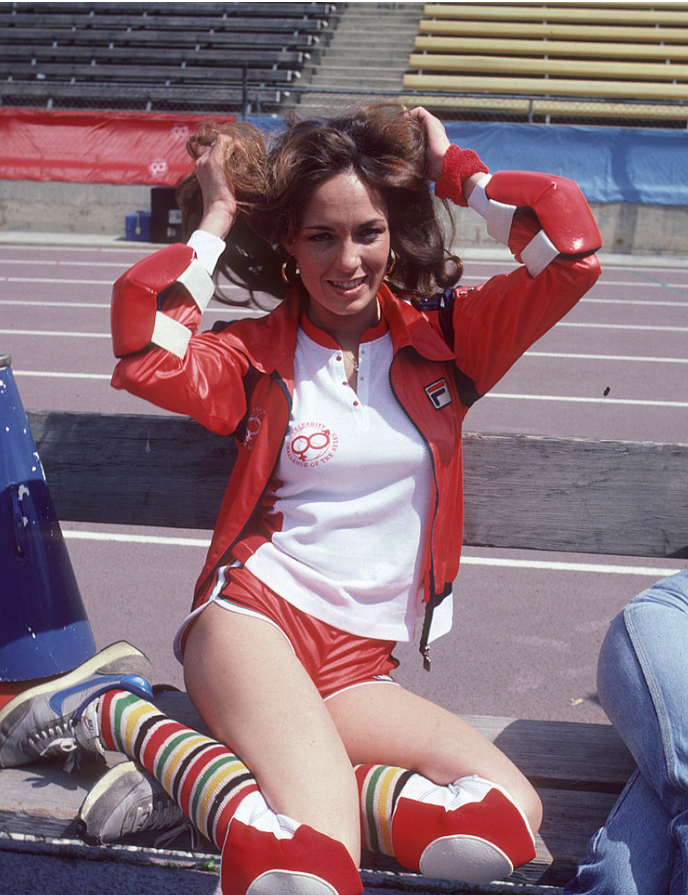
Catherine Bach (Photo by Ron Galella/Ron Galella Collection via Getty Images)
Few television characters have left such a lasting mark on popular culture as Daisy Duke. Played by Catherine Bach on The Dukes of Hazzard, Daisy quickly became one of the show’s most recognizable and beloved characters. Even decades after the series ended, her name remains connected to a particular style of cut-off denim shorts. The term “Daisy Dukes” became so widely known that many people today use it without necessarily knowing where the expression originated.
That is an impressive legacy for a television character.
Daisy’s popularity was about more than fashion, however. She was confident, independent, resourceful, and never afraid to get involved in the action. While Bo and Luke Duke were usually at the center of the show’s spectacular car chases and daring escapes, Daisy was much more than a supporting character. She could hold her own alongside the men and frequently demonstrated that she was just as capable of handling trouble as anyone else in Hazzard County.
The Search for Daisy Duke
When producers were casting the role of Daisy Duke, they reportedly had a very specific image in mind. According to Catherine Bach, they were searching for someone who could capture a glamorous, curvy, Southern-inspired appearance. Dolly Parton was reportedly one of the visual inspirations behind the casting search.
Bach didn’t necessarily fit the exact mold the producers initially imagined, but she brought something different to the audition. Rather than simply trying to imitate another performer, she gave Daisy her own personality and presence.
That decision proved to be a winning one.
Bach auditioned for the role and made such a strong impression that she was reportedly hired that same night. Instead of becoming a copy of another celebrity, she developed Daisy into a character with an identity all her own.
Her interpretation combined confidence, humor, warmth, independence, and a playful sense of adventure. Those qualities helped Daisy become one of the central personalities of The Dukes of Hazzard.
The Dolly Parton Connection
Interestingly, the connection between Daisy Duke and Dolly Parton wasn’t simply something that appeared during casting. It was also reflected in the character’s early development.
In the pilot episode, Daisy is portrayed as someone who knows the words to Dolly Parton’s songs, and early episodes suggest that she has ambitions of pursuing a career connected to music.
That detail gave the character another dimension. Daisy wasn’t simply there to look fashionable or react to whatever Bo and Luke were doing. She had interests, ambitions, and dreams of her own.
Catherine Bach later explained that Daisy was inspired by several different people she had known throughout her life. Rather than basing the character entirely on one individual, Bach drew from different personalities and experiences.
She described Daisy as a combination of people she had known in school, women she had met while living in Georgia, elements of Dolly Parton’s personality, and aspects of herself from her younger years.
That approach helps explain why Daisy felt more authentic than a simple stereotype.
Bach understood that the character needed to be strong enough to stand beside Bo and Luke while still having her own distinctive personality. Daisy was independent, physically capable, and willing to take risks. She could participate in adventures just as easily as the Duke boys.
In an interview from the late 1970s, Bach emphasized those qualities when discussing the character. Her description presented Daisy as someone who was independent, active, and capable of doing things that traditionally might have been associated with male characters.
That became an important part of Daisy’s appeal.
More Than a Famous Outfit
Daisy Duke’s clothing became one of the most recognizable aspects of the series, but reducing the character to her wardrobe overlooks much of what made her popular.
The famous denim shorts certainly attracted attention, but Bach’s performance gave Daisy personality and staying power.
Daisy was often clever enough to find creative solutions to difficult situations. She could be playful without being helpless, confident without constantly needing to prove herself, and adventurous without losing her sense of humor.
Her relationship with Bo, Luke, and Uncle Jesse also helped establish her as an essential part of the Duke family.
She wasn’t simply someone who happened to live in Hazzard County. She was part of the family at the heart of the series.
That sense of belonging made her character more important to the overall story.
How “Daisy Dukes” Became a Cultural Term
Perhaps the most remarkable part of Catherine Bach’s legacy is that her character’s name eventually became associated with an entire style of clothing.
Cut-off denim shorts are still commonly called “Daisy Dukes,” even by people who may never have watched an episode of The Dukes of Hazzard.
That is unusual in entertainment history.
Characters occasionally influence fashion, but it is much rarer for a character’s name to become a widely recognized term for a particular style.
The phrase has survived for decades and continues to appear in fashion discussions, magazines, television programs, and everyday conversation.
It demonstrates just how deeply Daisy Duke became embedded in popular culture.
Catherine Bach could hardly have known when she first put on the costume that the character’s name would eventually become associated with a fashion style far beyond the original television series.
A Small Bloopers Fans Love
While The Dukes of Hazzard is remembered for major car stunts and memorable characters, the series also contained plenty of small mistakes that fans enjoy discovering.
One amusing example reportedly occurs in the episode State of the Country.
Near the end of the episode, Sheriff Rosco P. Coltrane addresses Daisy and accidentally calls her “Cathy” rather than Daisy. The mistake happens quickly and can easily go unnoticed during a normal viewing.
For longtime fans who have watched the episode multiple times, however, moments like this can be especially entertaining.
Television production was a complicated process, and actors sometimes made small verbal mistakes while filming. Unless the error significantly affected the scene, there was little reason to stop production and repeat everything.
As a result, occasional slip-ups made it into the final episode.
Today, those mistakes have become part of the fun.
Fans can revisit old episodes and look for moments where a character says the wrong name, a vehicle changes between shots, an object moves unexpectedly, or a continuity detail doesn’t quite match.
The “Cathy” mistake is exactly the kind of tiny blooper that most viewers would probably miss the first time around.
Why Daisy Duke Remains Memorable
Catherine Bach’s portrayal of Daisy Duke helped create a character who became much larger than the television series itself.
Daisy represented a different kind of female television character for the era. She was fashionable and charismatic, but she was also active, independent, and capable. She wasn’t simply waiting for Bo and Luke to rescue her.
That combination helped make her memorable.
Bach also brought a natural warmth to the character that made Daisy easy for audiences to root for. Whether she was helping her family, becoming involved in one of the Duke boys’ latest adventures, or simply adding humor to a scene, Daisy felt like an important part of the Hazzard County world.
Her popularity has endured because the character represents many of the elements people remember about the show itself: fun, adventure, humor, confidence, and nostalgia.
A Legacy That Goes Beyond Television
Looking back at The Dukes of Hazzard today, it is easy to understand why Catherine Bach’s Daisy Duke became such an enduring figure.
The series had plenty of memorable elements—the General Lee, the Duke boys, Boss Hogg, Sheriff Rosco, Uncle Jesse, spectacular car jumps, and catchy music. But Daisy added something distinctive to the mix.
She became a character whose influence reached beyond the show.
Her name became a fashion term. Her image became instantly recognizable. Her personality helped establish her as one of the most memorable women in television during the show’s era.
And perhaps most importantly, Catherine Bach didn’t simply play the character the producers originally imagined. She helped shape Daisy into someone with her own identity.
From the early Dolly Parton inspiration to the famous denim shorts and even tiny bloopers like Rosco’s “Cathy” slip-up, Daisy Duke’s story is filled with details that continue to fascinate fans.
Decades later, viewers can still watch The Dukes of Hazzard and discover something they missed before. A familiar scene may reveal a small continuity mistake, a line may sound different after years of repeated viewing, or a costume may remind audiences just how influential the series became.
That is the lasting magic of Daisy Duke.
She started as a television character in a popular adventure series and became something much bigger: a recognizable name, a fashion reference, and a nostalgic symbol of an unforgettable era of television.
The Ending Fans Never Got to See
When The Dukes of Hazzard came to an end in 1985, it marked the close of an era for a cast and crew who had spent years bringing the adventures of Hazzard County to television. Among them, John Schneider, who played Bo Duke and was known for his enthusiasm for the series, reportedly felt the ending particularly deeply.
The final broadcast episode, Opening Night at the Boar’s Nest, gave viewers a cheerful farewell. Rather than ending the series with a dramatic cliffhanger, the story centered around the characters celebrating Boss Hogg’s unexpected return to the stage. It provided the kind of lighthearted conclusion that fit the show’s personality.
But there was reportedly another moment filmed during the production that viewers never got to see.
According to Schneider’s recollections, the final scene he remembered filming involved Bo and Luke Duke sitting together in the General Lee near the Boar’s Nest. The scene gave the two cousins one final opportunity to exchange some familiar banter before production officially ended.
For Schneider, however, the significance of the moment went far beyond what appeared on camera.
When the filming finally stopped, he realized that the years of working on the series were over. The lights, cameras, cars, costumes, and familiar routines that had defined his life for so long were suddenly coming to an end.
Schneider later recalled the emotional experience of saying goodbye to the show and becoming overwhelmed after hearing that production had wrapped.
It was an especially emotional moment because the General Lee had been such an important part of the series. Sitting behind the wheel of the familiar orange Charger, Schneider was confronted with the reality that there would be no more regular episodes to film.
For audiences, the goodbye was equally difficult in its own way.
Millions of viewers had spent years following Bo, Luke, Daisy, Uncle Jesse, Boss Hogg, and Sheriff Rosco through countless adventures. The series had become part of their weekly routine, and suddenly there were no new episodes to look forward to.
Yet the story didn’t completely end there.
The Show Found a Second Life
More than a decade after the original series finished, reruns introduced The Dukes of Hazzard to another generation.
When the show returned to television through reruns on TNN, longtime fans had another opportunity to revisit Hazzard County, while younger viewers discovered the General Lee and the Duke family for the first time.
The renewed interest demonstrated how strong the show’s nostalgic appeal had become.
The characters were instantly recognizable, the car chases remained entertaining, and the humor still had the ability to bring back memories for viewers who had watched the series during its original run.
The renewed popularity eventually helped lead to additional television projects, including reunion-style movies that brought some of the characters and cast members back to the screen.
In that sense, The Dukes of Hazzard never completely disappeared. It simply moved from first-run television into the world of nostalgia, reruns, reunions, and a new generation of fans.
Waylon Jennings Was the Voice Everyone Heard
Few people were as closely associated with The Dukes of Hazzard from outside the cast as country music legend Waylon Jennings.
Jennings served as the show’s narrator and provided the distinctive voice that helped establish the atmosphere of the series. His voice was immediately recognizable, and his storytelling style became an essential part of the program’s identity.
He also performed the famous theme song, Good Ol’ Boys.
The song became strongly associated with the show and with Jennings himself. It captured the playful Southern spirit of the series while introducing viewers to the world of Hazzard County.
The recording also became a major success for Jennings. The song reached the top of the country music charts in 1980 and became one of the most recognizable television themes of its era.
One of the most amusing details about Jennings’ involvement with the show was that his mother reportedly watched the program regularly, hoping to see her famous son on television.
There was just one problem.
She could hear him, but she could barely see him.
Jennings appeared primarily as the unseen narrator, while the opening sequence featured only a limited glimpse of him. Viewers could see his hands playing guitar, but his face wasn’t prominently shown.
That led to a memorable joke in the extended version of the theme song, where Jennings humorously commented on his mother wondering why television kept showing his hands instead of his face.
The joke became one of those small details that longtime fans remember fondly.
Eventually, Jennings did get an opportunity to appear on screen.
In 1984, he guest-starred as himself in an episode titled Welcome, Waylon Jennings. The appearance gave viewers the chance to see the man whose voice had been guiding them through the adventures of Hazzard County for years.
Waylon Jennings and His Own General Lee
Jennings’ connection to The Dukes of Hazzard extended beyond the theme song and narration.
As a gesture of appreciation for his contribution to the series, Jennings reportedly received his own orange Dodge Charger styled after the General Lee.
The vehicle featured many of the visual characteristics associated with the television car, including the orange paint, the “01” markings, and the distinctive roof design.
For Jennings, the car became a memorable personal possession.
He later wrote about the vehicle and described the humor he found in having such a recognizable car sitting at his home. The General Lee had become a symbol of the television series, so owning one personally was a unique connection to the show.
The story of Jennings’ car continued to attract attention even after his death.
Years later, the vehicle reportedly resurfaced for sale through an online auction. Documentation and personal material connected to Jennings were included with the vehicle, making it especially interesting to collectors and fans.
The asking price was substantial, reflecting how much value collectors can place on vehicles with a connection to television history.
For fans, the car represented much more than an old Dodge Charger. It was a piece of The Dukes of Hazzard history and a reminder of Jennings’ role in creating the show’s distinctive sound and personality.
The General Lee Was a Production Nightmare
The General Lee may have looked like one car on television, but the production actually needed many different Dodge Chargers to keep the series running.
The reason was simple: the cars were constantly being damaged.
The Dukes of Hazzard became famous for its enormous vehicle jumps, crashes, slides, collisions, and other stunts. Such sequences placed tremendous stress on the cars.
A vehicle that survived one stunt might be too damaged to use for another.
Replacing ordinary police cars was relatively straightforward, but replacing General Lees was much more difficult. Dodge Chargers from the late 1960s were no longer being manufactured, so production crews had to search for surviving examples.
According to accounts of the production, crew members sometimes went to extraordinary lengths to find replacement Chargers. If they spotted one on the road or sitting somewhere, they could attempt to contact the owner and purchase the vehicle.
The result was an enormous collection of General Lee cars used throughout the series.
Various estimates have circulated regarding the exact number, with commonly cited figures placing the total somewhere in the hundreds. Many were eventually destroyed or damaged beyond practical repair during filming.
That number helps demonstrate just how demanding the show’s stunt sequences were.
Every time the General Lee launched into the air, the production wasn’t simply risking a prop. It was potentially destroying a real, increasingly difficult-to-find classic automobile.
What Made the General Lee So Recognizable?
The television version of the General Lee was based primarily on a 1969 Dodge Charger.
Its bright orange body made it immediately visible, but several additional details completed the famous look.
The roof carried the Confederate battle flag design, the doors displayed the “GENERAL LEE” name, and the number “01” appeared prominently on the sides.
The combination created one of television’s most recognizable vehicles.
Interestingly, the car’s appearance wasn’t completely identical throughout the show’s production.
During the earliest episodes filmed in Georgia, the General Lee reportedly featured an additional checkered detail near the rear window. Reproducing the design consistently became difficult, particularly because production required multiple Chargers to be prepared as General Lees.
As the show continued, the detail was removed.
It’s a small example of how television production often evolves during the making of a series. What viewers see as a perfectly established visual identity may actually have developed gradually as producers discovered what worked best.
Why So Many Chargers Were Needed
The General Lee wasn’t used simply for ordinary driving scenes.
The show regularly demanded extreme stunts that could destroy a vehicle in seconds.
A Charger might be used for a simple driving sequence, while another vehicle would be prepared specifically for a jump. Yet another could be used for a crash or close-up shot.
This allowed the production to preserve some cars while sacrificing others for major action sequences.
The approach was expensive, but it was necessary.
The spectacular jumps became one of the main reasons audiences tuned in. Viewers knew that sooner or later the General Lee would be flying through the air, sliding around a corner, or escaping from another dangerous situation.
Those practical stunts helped define the show’s identity.
A Legacy Built Around Cars, Characters, and Music
Looking back, it is difficult to separate The Dukes of Hazzard from the General Lee.
The car was an essential part of the show’s visual language, just as Waylon Jennings’ voice was essential to its sound.
The roar of the Charger, the familiar opening narration, the theme song, and the sight of Bo and Luke racing through Hazzard County created an experience that audiences could immediately recognize.
But the show’s lasting popularity wasn’t based on one element alone.
John Schneider and Tom Wopat gave Bo and Luke their distinctive personalities. Catherine Bach made Daisy Duke an enduring pop-culture figure. Sorrell Booke turned Boss Hogg into an unforgettable comic antagonist, while James Best brought Sheriff Rosco P. Coltrane to life with his exaggerated humor.
Then there was Waylon Jennings, whose voice tied everything together.
His narration gave the show a storytelling quality that made each episode feel like another chapter in an ongoing Southern adventure.
Why Fans Still Remember It
More than four decades after its original debut, The Dukes of Hazzard continues to attract attention because it represents a particular period of television when practical stunts, memorable characters, and catchy music could turn a simple adventure series into a cultural phenomenon.
The behind-the-scenes stories make that legacy even more fascinating.
There was the emotional final day of filming, when the cast realized the adventure was over. There was Jennings’ humorous frustration that his mother could hear his voice but mostly see his hands. There was his personal General Lee, which became a tangible reminder of his connection to the show.
And, of course, there were the hundreds of Chargers that production crews searched for, modified, jumped, crashed, repaired, and ultimately sacrificed in the name of entertainment.
Those details reveal just how much work went into creating the world of Hazzard County.
For longtime viewers, these stories can bring back memories of sitting in front of the television and waiting for the next General Lee chase. For newer audiences, they provide a glimpse into a style of television production that relied heavily on practical effects and larger-than-life performances.
In the end, The Dukes of Hazzard became more than a television series.
It became a combination of characters, music, cars, comedy, and unforgettable stunts that remained recognizable long after the final episode aired.
And while the real ending may have happened quietly behind the cameras, the story of Hazzard County never truly disappeared. Through reruns, television movies, collectibles, music, and generations of fans, Bo, Luke, Daisy, Waylon Jennings, and the General Lee continue to live on in television nostalgia.
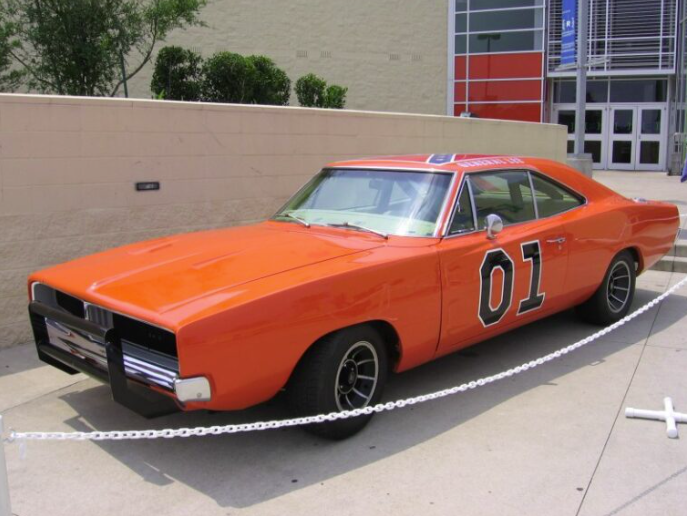
Wikipedia Commons / Schmendrick
Few television cars have become as instantly recognizable as the General Lee from The Dukes of Hazzard. The bright orange 1969 Dodge Charger, complete with its distinctive markings and famous “01” doors, became one of the biggest symbols of the series. Whenever Bo and Luke Duke climbed behind the wheel, viewers knew that another wild chase, daring escape, or spectacular stunt was probably about to begin.
But even one of television’s most famous cars has a fascinating history. From the inspiration behind its name to the surprisingly small number of episodes in which it didn’t appear, the General Lee has plenty of stories surrounding it.
Where the General Lee Got Its Name
The name “General Lee” was inspired by Confederate General Robert E. Lee. The choice was intended to fit the show’s Southern setting and the image of the Duke boys’ rebellious lifestyle.
However, the idea reportedly had another connection. The show’s creators were inspired in part by stories of real-life moonshine runners, whose fast cars were used to transport illegal liquor through rural areas while avoiding law enforcement.
One vehicle associated with those stories was a 1958 Chrysler known as “Traveler,” a name that was also considered during the development of the Duke boys’ car.
Ultimately, the producers chose “General Lee.”
The name had a stronger connection to the Southern setting and, perhaps more importantly, sounded like something that would stick in viewers’ memories.
It certainly did.
The General Lee eventually became one of the most recognizable automobiles in television history.
Its orange paint, distinctive roof design, “01” markings, and “GENERAL LEE” lettering created an image that audiences could identify instantly. The car became so closely associated with the series that it was almost impossible to think about The Dukes of Hazzard without picturing the Charger flying over a dirt road or racing through Hazzard County.
The One Episode Without the General Lee
Considering how important the General Lee was to the show, it is surprising to learn that there was an episode in which the famous car didn’t appear.
That episode was Mary Kaye’s Baby, the third episode of the series.
For a show built heavily around the Duke boys, their car, and spectacular driving sequences, leaving the General Lee out was unusual. The vehicle was more than transportation. It was practically another character.
Many episodes used the Charger as a central part of the story, particularly during the famous chase sequences. Bo and Luke depended on their driving skills to escape Sheriff Rosco and other authorities, and the General Lee often seemed to have a personality of its own.
That makes Mary Kaye’s Baby an interesting exception for longtime fans.
Viewers who watch the series specifically to see the General Lee in action may not even realize at first that the car is missing. But once you know about the episode, it becomes one of those small pieces of trivia that makes a rewatch more interesting.
The Show’s Biggest Plot Hole
One of the most amusing continuity issues in The Dukes of Hazzard involves one of the central facts about Bo and Luke Duke.
At the beginning of the series, the Duke boys are on probation. Their legal restrictions are an important part of the show’s premise and help explain why they cannot simply leave Hazzard County whenever they want.
The probation situation becomes particularly important because it creates a recurring source of conflict.
Bo and Luke are constantly trying to stay out of trouble while dealing with Boss Hogg, Sheriff Rosco, and the various schemes taking place around them.
But the storyline became complicated when John Schneider and Tom Wopat, who played Bo and Luke, temporarily left the show during the fifth season because of a salary dispute.
The producers needed a way to explain the absence of the two lead characters.
Their solution was to introduce two new Duke cousins: Coy Duke, played by Byron Cherry, and Vance Duke, played by Christopher Mayer.
The series explained that Bo and Luke had left Hazzard County to pursue professional NASCAR racing.
On the surface, it was a convenient explanation.
But longtime viewers quickly noticed a problem.
How could Bo and Luke travel around the country to race professionally if they were still under the same probation restrictions that had previously prevented them from leaving Hazzard County?
It created a rather obvious logical problem within the show’s established storyline.
Of course, The Dukes of Hazzard was never intended to function as a completely realistic legal drama. The series regularly prioritized entertainment, comedy, and action over strict realism.
Still, continuity issues like this are exactly the kind of details that fans love discussing.
The temporary departure of Schneider and Wopat was also a major change for the series. Bo and Luke were the heart of the show, and replacing them with Coy and Vance inevitably changed the dynamic.
Although the new cousins had their own personalities and storylines, viewers strongly associated The Dukes of Hazzard with Bo and Luke.
Eventually, Schneider and Wopat returned, restoring the familiar Duke family combination that audiences had grown attached to.
Flash the Basset Hound Becomes a Star
Not every fan favorite on The Dukes of Hazzard was human.
Rosco P. Coltrane’s loyal basset hound, Flash, became one of the show’s most beloved supporting characters.
Flash first appeared in the episode Enos Strate to the Top and quickly became an important part of Rosco’s world.
The dog was adopted from a Los Angeles animal shelter, according to information shared by sources connected with the series.
Flash’s role was generally simple but effective. She accompanied Rosco during his adventures and added another layer of humor to his scenes.
Rosco might be busy chasing the Duke boys or becoming involved in another one of Boss Hogg’s schemes, but Flash was often nearby.
Her relaxed personality also created a funny contrast with Rosco’s exaggerated energy.
James Best, who played Rosco, reportedly developed a practical way of getting Flash to look toward the camera during filming.
The secret?
Hot dogs.
Pieces of hot dog were used to attract Flash’s attention and encourage her to look in the desired direction.
Once the scene was finished, Flash received her reward.
It was a simple trick, but it demonstrates how much patience and creativity can be required when working with animals on a television set.
Unlike human actors, dogs don’t necessarily understand that they’re supposed to hit a particular mark, look at a camera, or repeat the same action multiple times.
A little motivation can go a long way.
For Flash, apparently, that motivation came in snack-sized pieces.
Why Flash Was So Memorable
Flash worked because she didn’t need complicated dialogue or elaborate storylines to make an impression.
Her presence alone could make a scene more entertaining.
She became part of Rosco’s identity and helped reinforce the comedic nature of his character. Seeing the sheriff interacting with his dog gave viewers another side of Rosco beyond his attempts to catch Bo and Luke.
The relationship also made Rosco seem more human.
Despite being one of the Duke boys’ most persistent opponents, he wasn’t portrayed as a completely serious lawman. His relationship with Flash helped emphasize the goofy, exaggerated personality that made him such a popular character.
For many viewers, Flash became one of those unexpected elements that made Hazzard County feel like a real community.
Can You Spot the Random Onlookers?
Another fascinating detail comes from the filming of the series itself.
Because The Dukes of Hazzard was filmed on location for various sequences, members of the public sometimes had opportunities to watch production from nearby.
And occasionally, those curious spectators ended up appearing on camera.
It is easy to forget that filming a television series in public spaces can attract attention. People walking or driving through the area may not realize that their presence could end up in the final footage.
But television productions don’t always have the luxury of controlling every person in the background.
As a result, sharp-eyed fans have identified what appear to be random onlookers visible during certain scenes.
These people weren’t necessarily actors or extras. They may simply have been individuals who happened to be nearby when filming took place.
For modern viewers, spotting them can be a fun challenge.
Instead of watching only the main characters, fans can scan the background and look for people who appear to be watching the action themselves.
It creates a strange little moment within the show: the fictional citizens of Hazzard County are performing their roles while real people stand nearby watching the filming.
Sometimes those real-life spectators accidentally become part of the finished episode.
The Little Details Make the Show More Fun
One of the reasons The Dukes of Hazzard remains popular among nostalgic television fans is that the series provides so many opportunities for discovery.
You can watch the show for the car chases and stunts, but you can also watch it for the little mistakes and unexpected details.
The General Lee’s unusual history makes the car fascinating even before it appears on screen.
The episode without the Charger gives fans an unusual exception to one of the show’s biggest traditions.
The Bo and Luke probation storyline creates an amusing plot hole when the characters are temporarily written out.
Flash provides a behind-the-scenes glimpse into how animal actors were handled on set.
And the random onlookers remind viewers that television production doesn’t always happen in a perfectly controlled environment.
These details don’t necessarily take away from the show’s entertainment value.
In many cases, they add to it.
A Classic Filled With Imperfections
The Dukes of Hazzard was never meant to be a documentary about realistic law enforcement, legal procedures, or automotive engineering. It was an adventure-comedy series designed to entertain.
That meant the show could bend reality whenever necessary to create a better chase, a bigger stunt, or a funnier storyline.
The result was a television series filled with memorable moments—and plenty of imperfections.
For modern fans, those imperfections have become part of the experience.
Watching an old episode can feel like a treasure hunt. You might notice a continuity mistake, spot an unfamiliar car, catch a character saying the wrong name, or see someone in the background who clearly wasn’t supposed to attract attention.
And then there are the larger mysteries and stories surrounding the production, such as the enormous number of General Lee Chargers required to keep the stunt sequences going.
The more fans learn about the show, the more fascinating it becomes.
Ultimately, the enduring appeal of The Dukes of Hazzard comes from its combination of action, comedy, characters, cars, and nostalgia. The General Lee remains its most recognizable symbol, but the smaller details are what make the series especially fun to revisit.
Whether you’re watching for Bo and Luke’s daring escapes, Rosco’s hilarious attempts to catch them, Flash’s appearances, or the occasional background blooper, there’s always something new to notice.
And perhaps that’s the real charm of classic television: even after you’ve seen an episode dozens of times, you can still discover something hiding in plain sight.
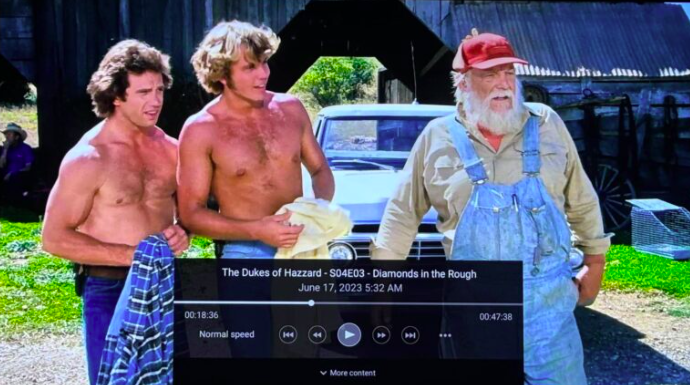
Facebook / Screenshot / Eric Sweeney
Who’s Really Driving the General Lee?
One of the most entertaining details fans can discover while rewatching The Dukes of Hazzard involves the General Lee’s driving scenes. With so many high-speed chases, close-up shots, and spectacular stunts packed into each episode, the production team often relied on previously filmed footage to help create the illusion of one continuous sequence.
This sometimes resulted in an amusing continuity mistake.
In certain scenes, stock or previously recorded footage of Bo and Luke driving the General Lee was reused. The problem was that the footage did not always match what was happening in the current scene. On occasion, viewers could see Bo apparently sitting behind the wheel even though Luke was supposed to be the one driving at that particular moment.
Then, almost immediately, the camera would cut to another angle and show Luke in the driver’s seat.
For viewers watching casually, the mistake was easy to miss. The action moved quickly, and the General Lee was usually speeding, jumping, or being chased by police cars. Most people were focused on the excitement rather than checking which Duke cousin was actually driving.
But fans who paid close attention could spot the inconsistency.
It is a perfect example of the type of continuity error that can happen when a television production uses footage filmed at different times. Rather than shooting every driving shot from scratch, editors could reuse material that already showed the car moving through a particular location or performing a particular maneuver.
The approach saved time and money, but it could also create unexpected combinations.
For longtime fans, these mistakes have become part of the fun of watching the series. Instead of ruining the experience, they provide another reason to revisit familiar episodes and look for details that might have gone unnoticed the first time around.
Was There Romance Between Daisy Duke and the Duke Boys?
Another question that has intrigued fans for decades concerns Catherine Bach’s Daisy Duke and her relationships with her male co-stars.
Because Daisy was attractive, confident, and often used her charm to get herself and her family out of difficult situations, viewers naturally wondered whether there was any romance happening behind the scenes as well.
On the show, Daisy occasionally used her personality and flirtatious charm to persuade police officers, criminals, or other characters to show mercy toward the Duke family. Her ability to talk her way out of trouble was part of what made her such an effective character.
But the fictional chemistry between Daisy and the Duke boys naturally led some viewers to wonder whether the actors had developed romantic relationships in real life.
Catherine Bach worked closely with both John Schneider and Tom Wopat throughout the series. The three actors spent years filming together, traveling for promotional appearances, and becoming closely associated with one another in the public imagination.
That naturally encouraged speculation.
However, the fact that actors have convincing chemistry on screen doesn’t necessarily mean there was a romantic relationship behind the cameras. Cast members can develop strong friendships and professional bonds without becoming couples.
The relationship between Bach, Schneider, and Wopat was primarily centered around their work on the series and the characters they portrayed.
Their believable chemistry helped make the Duke family dynamic work so well. Daisy felt like a genuine part of Bo and Luke’s world, and the three performers developed an easy rhythm that audiences quickly recognized.
In the end, the real-life stories surrounding The Dukes of Hazzard are often just as fascinating as the fictional adventures. From driving footage that accidentally switches the driver to rumors about relationships among the cast, these details give fans another reason to look beyond the screen and explore how the classic series was actually made.

Getty Images
For fans of The Dukes of Hazzard, the relationships between the cast members have always been almost as fascinating as the adventures that unfolded in Hazzard County. Viewers watched Bo and Luke Duke race through trouble, Daisy Duke come to the rescue, and the rest of the colorful cast create one unforgettable episode after another.
Because John Schneider, Tom Wopat, and Catherine Bach spent so much time working together, fans naturally wondered whether the chemistry they shared on screen ever turned into something romantic away from the cameras.
According to Bach, the answer was clear: it didn’t.
Catherine Bach Saw Her Co-Stars as Brothers
Catherine Bach, who became famous around the world for playing Daisy Duke, has spoken warmly about her relationships with John Schneider and Tom Wopat.
Rather than seeing the two actors as potential romantic partners, Bach explained that she viewed them much more like brothers.
That perspective makes sense when considering how closely the three performers worked together. For years, they spent long hours filming episodes, rehearsing scenes, traveling for promotional events, and dealing with the pressures of being part of one of television’s biggest shows.
Their professional relationship became a genuine friendship.
Bach has described Schneider and Wopat as charming and attractive men who were admired by countless female fans. But from her personal perspective, that wasn’t how she saw them. The years they spent together had created a family-like bond that made the idea of dating either actor seem strange.
Her comments also highlight an important difference between on-screen chemistry and real-life relationships.
Actors can convincingly portray characters who flirt, argue, fall in love, or share intense emotional connections without experiencing those same feelings themselves. The chemistry that audiences see is often the result of professional skill, friendship, trust, and familiarity.
In the case of The Dukes of Hazzard, the chemistry between Bach, Schneider, and Wopat was one of the reasons the Duke family dynamic felt so natural.
Bo, Luke, and Daisy weren’t simply three actors appearing in the same scenes. They felt like people who had known each other for years.
That sense of familiarity came across on screen.
The Cast Became a Family
The bond among the cast members didn’t disappear when the series ended.
In fact, John Schneider has repeatedly spoken about how unusual it was for the relationships formed during the show to remain strong decades later.
In a 2014 interview, Schneider described the cast and crew as still being a family.
That is significant because television productions often have a very different lifespan from the relationships created during them. Actors may spend several years together on a successful series, only to go their separate ways once the final episode airs.
Sometimes cast members remain friends. In other cases, they rarely see one another again.
The Dukes of Hazzard appears to have been different.
The show’s popularity created a lasting connection between the people involved in it and the fans who supported them.
Even after production ended, conventions, interviews, reruns, reunion events, television specials, and fan communities continued bringing people connected to the series back together.
Schneider’s observation that the show had never really ended for the fans captures something important about television nostalgia.
A series may stop producing new episodes, but that doesn’t necessarily mean the audience stops caring about it.
For many viewers, characters become associated with specific periods of their lives. Watching an old episode years later can bring back memories of childhood, family gatherings, school vacations, or evenings spent watching television.
That emotional connection can be stronger than the original storyline.
Remembering the Cast Members We Lost
While the surviving cast members continue to celebrate the show’s legacy, several important members of the Dukes of Hazzard family have sadly passed away.
Sorrell Booke, who played the unforgettable Boss Hogg, died in 1994. His portrayal of the scheming Hazzard County boss remains one of the most memorable comic performances in the series.
Booke had a remarkable ability to make Boss Hogg entertaining without turning him into a truly frightening villain. His exaggerated expressions, distinctive voice, white suit, and constant schemes became central to the show’s humor.
Denver Pyle, who played Uncle Jesse Duke, passed away in 1997.
Uncle Jesse was the wise and compassionate figure at the center of the Duke family. He often served as the voice of reason when Bo and Luke became involved in another dangerous situation.
Pyle’s performance gave the show warmth and helped balance the action and comedy.
Waylon Jennings, the legendary country music performer who narrated the series as the Balladeer and performed the theme song, died in 2002.
Jennings’ distinctive voice became inseparable from the identity of The Dukes of Hazzard. Even viewers who never saw him on screen knew his voice immediately.
His narration helped give the series its unique storytelling style, while his music helped establish its country flavor.
James Best, who played Sheriff Rosco P. Coltrane, passed away in 2015.
Best transformed Rosco into one of television’s most memorable comic lawmen. His exaggerated personality, hilarious reactions, and relationship with Boss Hogg made him a favorite among fans.
Rosco’s attempts to catch the Duke boys often resulted in disaster, making him one of the show’s most entertaining characters.
Although these performers are no longer with us, their work remains preserved in the episodes they created.
Every rerun gives another generation an opportunity to see their performances.
That may be one of the most meaningful aspects of television: actors can leave behind performances that continue to entertain people long after they are gone.
Why the Show Still Feels Like a Family
The enduring connection between the cast and fans may explain why The Dukes of Hazzard continues to attract attention decades after its original run.
The show was never simply about cars and chase scenes.
At its center was a family.
Bo and Luke were cousins who relied on each other. Daisy was an essential member of the Duke family. Uncle Jesse provided guidance and stability.
Even the recurring villains and supporting characters became part of the larger Hazzard County community.
The audience became attached to these relationships.
That attachment is difficult to recreate.
Modern television can have larger budgets, more advanced visual effects, and increasingly complex storylines, but none of those things automatically create the sense of familiarity that viewers felt with the residents of Hazzard County.
The characters became familiar friends.
And when fans revisit the show today, they aren’t simply watching an old television program.
They’re revisiting a world they remember.
Could Daisy Duke Return?
Given the show’s enduring popularity, it is hardly surprising that fans have repeatedly wondered whether The Dukes of Hazzard could return in some form.
Catherine Bach has discussed the possibility of a reboot and has been careful not to promise anything.
She has pointed out that television is unpredictable. A concept that sounds perfect on paper doesn’t automatically become a successful series.
A reboot needs more than recognizable characters.
It needs a strong script, talented performers, the right creative team, and the kind of chemistry that made the original series work.
That’s particularly important with a beloved classic.
Fans often have strong emotional attachments to the original characters and actors, so a new version would inevitably face high expectations.
Simply bringing back the name wouldn’t be enough.
A successful reboot would need to understand what audiences loved about the original while finding a way to make the story relevant to a modern audience.
Bach has suggested that she remains open to the idea if the right circumstances come together.
That leaves the door slightly open for fans who would love to see Daisy Duke return.
What Would a Reboot Look Like?
A modern Dukes of Hazzard revival could take several different forms.
It could completely restart the story with a new cast playing younger versions of the characters.
It could continue the Duke family story with a new generation.
Or it could focus on familiar characters while introducing new faces.
Another possibility would be a reunion project featuring original cast members alongside younger performers.
For longtime fans, the most exciting option would probably be seeing some of the original actors return.
Catherine Bach has already made it clear that she hasn’t completely closed the door on revisiting Daisy.
John Schneider and Tom Wopat also remain closely associated with their iconic roles.
However, any future project would have to acknowledge the absence of cast members who have passed away.
Sorrell Booke, Denver Pyle, Waylon Jennings, and James Best were important parts of the original series, and no reboot could truly replace them.
Their absence would be felt.
At the same time, a new production could honor their contributions by incorporating elements that pay tribute to their characters and performances.
The Challenge of Recreating the Magic
The biggest question isn’t whether The Dukes of Hazzard could technically be brought back.
Modern television has more than enough technology to recreate fast cars, dramatic jumps, and spectacular chase sequences.
The real challenge would be recreating the personality of the original.
The show had a distinctive tone.
It combined comedy, family relationships, action, Southern atmosphere, practical stunts, memorable music, and larger-than-life characters.
The General Lee wasn’t simply a car.
Daisy wasn’t simply a fashion icon.
Boss Hogg wasn’t simply a villain.
Rosco wasn’t simply a sheriff.
Each element worked together to create a world that felt unique.
That chemistry is difficult to manufacture.
Perhaps that’s why the original series remains so important to its fans.
It captured a particular moment in television history that cannot be perfectly duplicated.
A Legacy That Continues
Even without a new series, The Dukes of Hazzard continues to live through reruns, fan communities, conventions, interviews, memorabilia, and memories shared by people who grew up watching it.
The show’s legacy is also carried by the actors who remain proud of their connection to it.
For Catherine Bach, John Schneider, and Tom Wopat, the series became an important chapter of their lives.
For fans, it became something more.
It became part of their childhood.
That explains why people still talk about Daisy Duke’s famous style, the General Lee’s spectacular jumps, Waylon Jennings’ unmistakable narration, Rosco’s hilarious mistakes, and Boss Hogg’s endless schemes.
The stories continue because the memories continue.
More Than Just an Old TV Show
Ultimately, the lasting popularity of The Dukes of Hazzard comes down to connection.
The cast connected with one another. The characters connected with viewers. And decades later, fans remain connected to the memories created by the show.Catherine Bach’s comments about seeing John Schneider and Tom Wopat as brothers rather than romantic interests reveal just how deep those relationships became.
John Schneider’s description of the cast as a family reinforces that idea.
And the continued interest in a possible reboot demonstrates that audiences haven’t completely said goodbye to Hazzard County.
Whether a new version ever happens remains uncertain.
But perhaps the most important point is that the original doesn’t really need a reboot to remain alive.
Every time an old episode plays, the General Lee races across the screen again. Daisy Duke returns with her trademark confidence. Bo and Luke find themselves in another impossible situation. Rosco launches another misguided pursuit. Boss Hogg develops another scheme. And somewhere in the background, Waylon Jennings’ familiar voice tells the story.
That is the magic of television nostalgia.
A show can end, but the memories it created don’t have to.
For millions of fans, The Dukes of Hazzard remains a reminder of a simpler style of television—one filled with memorable characters, practical stunts, humor, friendship, and a cast that genuinely felt like a family.
And as long as viewers continue returning to Hazzard County, the Duke family will never truly be gone.