By Voang Chi, Global Arts Correspondent | November 8, 2025
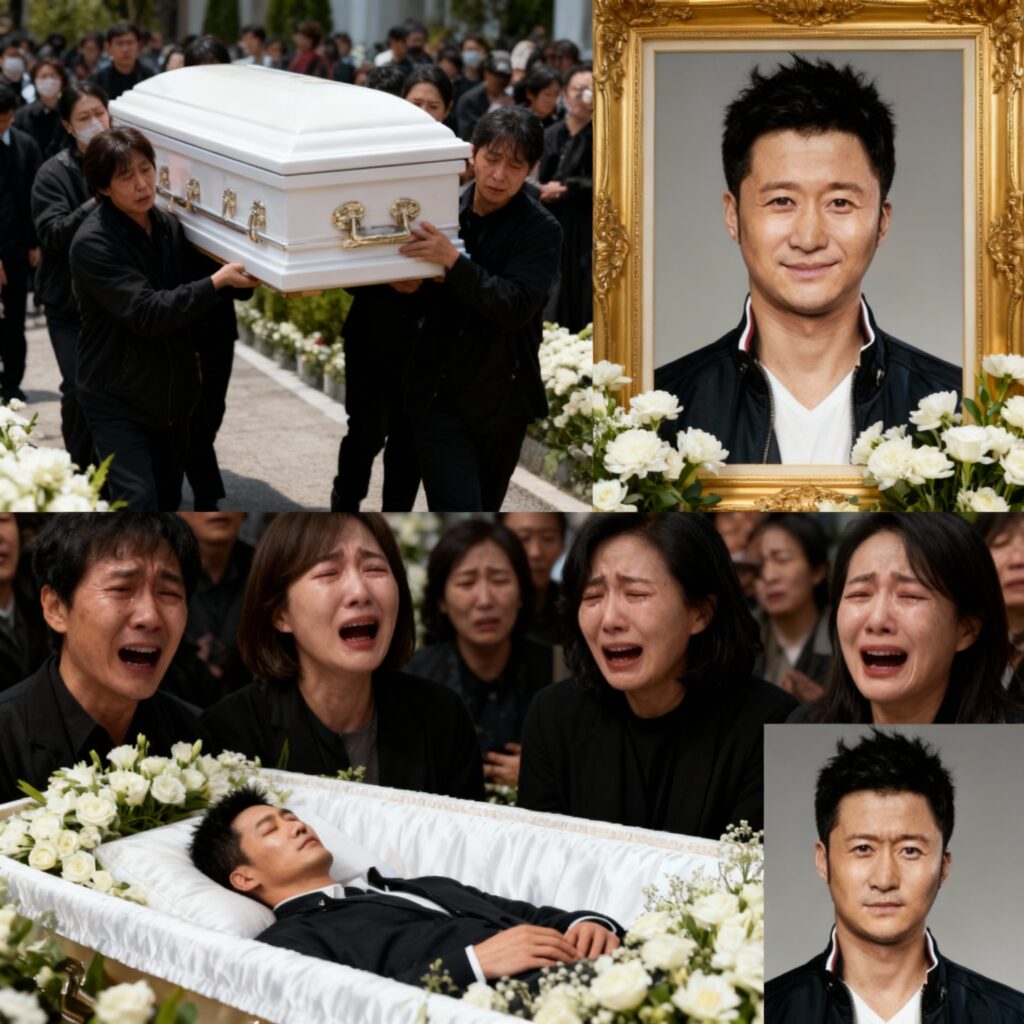
Beijing, China — The world of cinema and martial arts is reeling this evening as news spreads of the passing of Wu Jing, the celebrated actor, filmmaker, and action choreographer whose dedication to his craft redefined the spirit of Chinese cinema for a generation. He was 51.
According to a statement released by his family and representatives, Wu Jing passed peacefully earlier today, surrounded by loved ones, following a private battle with a long-term health condition. The statement, brief but heavy with emotion, concluded with words that echoed the humility of the man himself: “He lived not for fame, but for the stories he believed in. His strength remains with us.”
For millions across Asia and beyond, the news landed like a quiet thunderclap — not sudden, yet unbearably heavy. A somber shadow falls tonight over screens and hearts around the world.
A Life Shaped by Discipline and Dreams
Born in Beijing in April 1974, Wu Jing’s life was shaped by the discipline of martial arts long before the bright lights of film ever found him. The son of a martial arts family, he began training at the Beijing Sports Institute at the age of six, under the rigorous tutelage of renowned masters. Those early years carved into him the values that would define his later career — perseverance, humility, and an almost spiritual dedication to his craft.
Wu Jing’s entry into the entertainment industry came in the mid-1990s, when his agility, precision, and magnetic screen presence caught the attention of producers at the famed Beijing Film Studio. His early roles in Tai Chi Boxer (1996) and Legendary Assassin hinted at his potential, but it was his later reinvention as both actor and director that made him a household name.
His breakthrough moment came with Wolf Warrior (2015), a gritty, patriotic action film that combined breathtaking stunts with emotional storytelling. What began as a passion project quickly evolved into one of the highest-grossing franchises in Chinese history. Wu’s direction and starring performance showcased not only his physical prowess but his deep respect for those who serve and sacrifice. The sequel, Wolf Warrior 2 (2017), went on to become a cultural phenomenon — its rallying cry of resilience resonating far beyond China’s borders.
Then came The Wandering Earth (2019), a bold leap into science fiction that cemented Wu Jing’s status as a modern cinematic icon. His portrayal of astronaut Liu Peiqiang — torn between duty and family — reflected the same emotional gravity that defined his own life: courage anchored in compassion.
Beyond the Screen: A Man of Integrity and Quiet Strength
Those who worked with Wu Jing often spoke of his unwavering humility. Despite international fame and blockbuster success, he remained disarmingly grounded. On film sets, he was known to personally rehearse dangerous stunts, not out of ego, but to lead by example.
Jackie Chan once said of him, “Wu Jing represents the old spirit of Chinese martial arts — discipline, loyalty, respect. He never forgets where he came from.”
Indeed, behind the camera, Wu was equally admired for his compassion and humanity. He often used his influence to promote safety in stunt work, to advocate for veterans, and to support the next generation of martial artists. Off-screen, he was a devoted husband to actress Xie Nan and a loving father to their two sons. Friends describe him as a man of few words but deep sincerity — someone who preferred quiet dinners with family to glittering premieres.
When asked in a 2021 interview about his definition of success, Wu replied simply:
“It’s not how many awards you win, or how much money you make. It’s how much truth you can bring to your work — how many hearts you can move without pretending.”
A Private Battle, Fought with Dignity
Though rumors of health issues had surfaced over the past year, Wu Jing and his family maintained their privacy with characteristic grace. Sources close to the family confirmed that he had been undergoing treatment for a long-term condition, but continued to work and mentor young filmmakers until recent months.
Even as his health declined, Wu reportedly remained active in creative development, reviewing scripts and collaborating remotely with directors. His final on-screen appearance, in the 2024 film The Wandering Earth II: Beyond Time, now takes on a haunting beauty — his performance radiating both physical vulnerability and emotional strength.
His wife, Xie Nan, shared a brief message through social media earlier this evening:
“He was my greatest teacher — in patience, in love, in courage. He taught me that even when the body weakens, the soul can still stand tall.”
Her words, echoed by tens of thousands of condolence messages across platforms, painted a portrait of a man who faced his final chapter with peace and purpose.
Global Mourning: Tributes from Fans and Colleagues
Within minutes of the news breaking, tributes poured in from around the world.
Filmmaker Tsui Hark wrote: “Wu Jing was not only an action star, but a philosopher of movement — he turned every punch, every leap, into poetry.”
Donnie Yen, his longtime friend and occasional co-star, shared a simple photo — the two of them smiling on set — with the caption: “Brothers in spirit. You showed us what real courage looks like.”
On Chinese social media platform Weibo, the hashtag #FarewellWuJing soared past 300 million views in less than an hour. Fans across Asia gathered outside cinemas, leaving flowers and handwritten notes under posters of Wolf Warrior and The Wandering Earth. One message read: “You taught us that heroes can cry, but never give up.”
In Hollywood, Dwayne “The Rock” Johnson and Keanu Reeves, both admirers of Wu’s martial arts philosophy, also posted their condolences, calling him “a bridge between East and West action storytelling.”
A Legacy Written in Fire and Humanity
Wu Jing’s influence extended far beyond box office numbers. He was part of a generation that redefined the image of Chinese heroism on the global stage — moving it from myth to humanity, from spectacle to soul.
His films often carried a moral heartbeat: love of family, duty to others, courage in the face of chaos. He refused to compromise authenticity for glamour, often performing his own stunts and sustaining injuries that left permanent marks — physical symbols of a life lived in full devotion to art.
Critics have compared his work to that of Bruce Lee and Jet Li, yet Wu Jing’s legacy stands distinct. Where Lee embodied philosophy and Jet Li embodied grace, Wu Jing embodied endurance — the idea that every fall is part of the story, every scar a truth earned.
Beyond film, he championed disaster relief and youth martial arts education, quietly donating to earthquake recovery efforts and establishing scholarships for underprivileged students. To those who knew him best, his true greatness was not in the spotlight, but in how he used it.
The Ethics of Mourning a Public Soul
As the world processes this loss, journalists and fans alike face a delicate balance — celebrating a life while respecting a family’s grief. In an age of constant media noise, Wu Jing’s passing reminds us of the dignity that silence can hold.
In the official statement, his family requested privacy, asking the public to “honor him through kindness, not speculation.” Those words carry a quiet lesson: that legacies should be lived through gratitude, not gossip; through memory, not rumor.
The Curtain Falls, but the Story Lives On
Tonight, film projectors around the world flicker a little slower. Somewhere, an old Wolf Warrior poster catches the light of dusk. Somewhere, a young martial artist ties his first belt tighter, inspired by the man who taught him that courage is not the absence of fear, but the decision to face it.
Wu Jing once said, during a press conference for The Wandering Earth,
“Every film is a message to the future — a way to say: I was here, I tried, I cared.”
He was here.
He tried.
He cared.
And in doing so, Wu Jing became more than a star — he became a symbol of unwavering humanity. His story will continue to echo through generations of filmmakers, fighters, and dreamers who see in his journey the eternal truth of art: that even when the lights go out, the spirit that once danced in their glow remains.
As fans around the world unite in mourning and remembrance, one thing is certain — the legend of Wu Jing will not fade. It will live on in the pulse of every frame, every leap, every heart he touched.
Farewell, Master Wu Jing. Thank you for the courage, the memories, and the light you shared.
Your story will never stop moving.