

Celine Dion’s family sadly announced that…See more
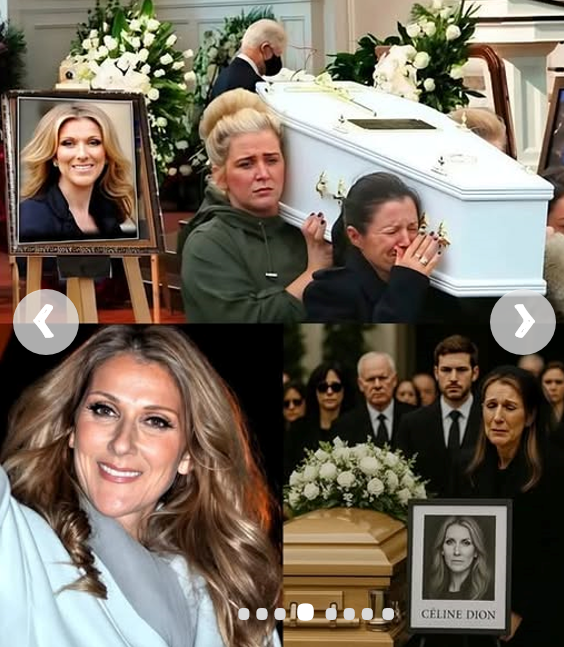

The world awoke in stunned quiet.

She was 58.
The announcement was brief, but every word carried the weight of a lifetime.
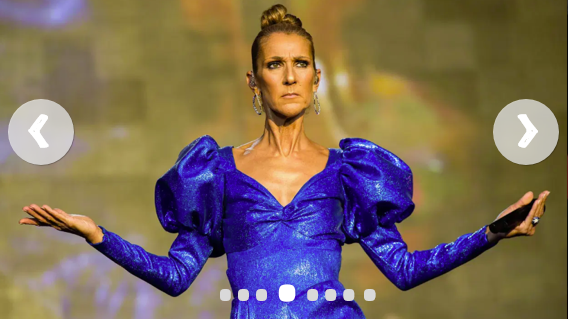
And somewhere, softly, inevitably, “My Heart Will Go On” began playing again.
Even in silence, her soul sings.
For years, Dion had fought publicly yet privately against the devastating condition that gradually stole from her the very thing that made her one of the most beloved performers in modern history: control over her body and voice. But those close to her often said she never allowed the illness to define her. Instead, it became another chapter in a life already marked by perseverance, sacrifice, and extraordinary emotional resilience.
“She kept hoping,” a longtime friend reportedly shared. “Not necessarily for herself alone, but because she wanted to sing for people again. Music was how she loved the world.”
In interviews during the final years of her life, Dion spoke openly about pain, uncertainty, and fear. Yet she rarely spoke with bitterness. There was sorrow, certainly, but also acceptance. A profound tenderness. She continued appearing before fans whenever possible, offering smiles that seemed almost maternal in their warmth.
“I miss seeing you,” she once said through tears in a recorded message to supporters. “But I still feel your love every day.”
That connection between artist and audience defined her entire career.
Born in Charlemagne, Quebec, the youngest of fourteen children, Dion grew up in a modest home where music was not luxury but necessity. Her parents owned a small piano bar, and from an early age, little Celine sang among clinking glasses and cigarette smoke, surrounded by melodies before she could fully understand them.
Family members often recalled her tiny voice rising above crowded rooms with startling power.
“She didn’t just sing,” her brother once remembered. “She felt every word.”
Money was scarce. Dreams seemed distant. But ambition lived quietly inside the family home. At just 12 years old, Dion recorded a demo tape with the help of her mother and brother. It eventually reached music manager René Angélil, who was so moved by her voice that legend says he mortgaged his own home to finance her first album.
It was the beginning of one of music’s most famous partnerships — artistic, emotional, and eventually romantic.
The transformation from shy French-Canadian teenager to international icon did not happen overnight. Dion worked relentlessly. Language coaches helped refine her English. Vocal training sharpened a voice already astonishing in its range and emotional precision. By the late 1980s and early 1990s, she was no longer simply a promising singer from Quebec.
She was becoming a global phenomenon.
Then came the songs that would define generations.
“The Power of Love.”
“Because You Loved Me.”
“It’s All Coming Back to Me Now.”
“All By Myself.”
And, of course, “My Heart Will Go On.”
That final anthem — forever tied to Titanic — transformed Dion into something larger than celebrity. Her voice became cultural memory itself. Weddings played her music. Olympic ceremonies echoed with her performances. Families mourned loved ones to her ballads. Entire generations learned the vocabulary of heartbreak through her songs.
Her vocals were technically unmatched, critics said. But technique alone never explained her power.
It was vulnerability.
When Dion sang, people believed her.
“She had the rare ability to make a stadium feel intimate,” one longtime producer reflected. “You felt like she was singing directly to your own grief.”
Awards followed in staggering numbers: Grammys, Junos, World Music Awards, Billboard honors, Oscar recognition. Her Las Vegas residency redefined modern live entertainment and transformed the city itself, proving that a residency could carry the prestige of a world tour while offering emotional consistency for artists seeking stability.
Night after night, audiences stood weeping as she delivered songs they had carried through decades of their own lives.
Yet behind the grandeur was a woman deeply devoted to family.
Friends often described Dion not as glamorous in private but grounded. She loved cooking for loved ones. She obsessed over details. She laughed loudly. She worried constantly about the people she loved. Fame never fully erased the small-town daughter from Quebec who viewed success not as entitlement but responsibility.
That humanity became especially visible during periods of personal loss.
When René Angélil died in 2016 after a battle with cancer, Dion’s grief unfolded before the public with heartbreaking openness. He had been her manager, mentor, husband, and anchor for more than three decades. Many wondered whether she could ever return fully to the stage.
But she did.
Not because the pain disappeared, she later admitted, but because singing allowed her to survive it.
“There are moments where music carries you when nothing else can,” she once told an interviewer.
Fans recognized themselves in that honesty.
She did not pretend strength was easy. She embodied it anyway.
As her illness progressed in later years, public appearances became increasingly rare. Concert cancellations disappointed audiences but were met largely with compassion. Videos shared by Dion revealed a woman confronting profound physical limitations while refusing to surrender emotionally.
There were heartbreaking moments.
Her voice trembling.
Her body visibly strained.
Her eyes fighting tears.
Yet even then, she radiated gratitude.
Medical experts praised her openness for raising awareness around neurological disorders rarely discussed publicly. Advocacy organizations noted significant increases in searches, donations, and conversations after Dion revealed her diagnosis.
“She gave visibility to people who often feel invisible,” one health advocate said Tuesday morning.
Around the world today, tributes continue pouring in.
Barbra Streisand reportedly called Dion “one of the purest vocal talents of our era.”
Andrea Bocelli described her as “a soul who sang with heaven already inside her.”
Adele shared a black-and-white photograph with the caption: “There will never be another voice like hers.”
Outside the Colosseum at Caesars Palace — home to her legendary residency — fans gathered carrying flowers, candles, handwritten letters, and photographs. Some sang quietly together. Others simply stood in silence.
In Montreal, church bells reportedly rang shortly after the announcement.
In Paris, the Eiffel Tower briefly shimmered in gold light as crowds below played her music through phone speakers. Videos circulating online showed strangers embracing while Dion’s ballads echoed across public squares.
Hashtags bearing her name climbed instantly worldwide.
But amid the scale of global mourning, the most devastating grief remained deeply personal.
A mother gone.
A sister gone.
A friend gone.
Her children, now adults, released a brief statement thanking supporters for “decades of love that carried our mother through every triumph and every difficult day.” They asked for privacy while acknowledging that Dion “belonged not only to us, but to the world.”
Perhaps that was always true.
Very few artists transcend entertainment itself. Fewer still become emotional landmarks in people’s lives. Dion achieved that rare immortality not through controversy or reinvention, but sincerity.
She believed in emotion without irony.
In an age increasingly cynical, she remained gloriously earnest. She sang love songs as though love itself still mattered profoundly. Audiences responded because, beneath the noise of modern life, many desperately wanted to believe that too.
“She taught people not to be ashamed of feeling deeply,” a cultural critic wrote Tuesday. “That may be her greatest legacy.”
And her influence stretched far beyond music.
Young singers studied her breath control and phrasing. Stage performers admired her stamina and professionalism. Humanitarian organizations praised her charitable efforts supporting children’s hospitals, disaster relief, and medical research initiatives. She donated quietly and frequently, often avoiding publicity whenever possible.
Crew members who toured with her for years frequently shared similar stories: handwritten thank-you notes, personal check-ins after family emergencies, gifts sent anonymously to struggling staff.
“She remembered names,” one former technician said. “That sounds simple, but in that world, it matters.”
Perhaps that is why grief today feels unusually intimate.
People are not mourning only a superstar. They are mourning someone who seemed emotionally present in their lives for decades. Her songs accompanied births, breakups, weddings, reconciliations, illnesses, funerals, lonely drives, and impossible goodbyes.
There are artists people admire.
And then there are artists people lean on.
Celine Dion was the latter.
By afternoon, memorial broadcasts had begun airing internationally. Television anchors struggled to maintain composure while introducing clips from her performances. Radio hosts shared personal stories between songs. Outside music stores in Quebec, flowers piled against windows beneath old album covers.
One handwritten sign simply read:
“Thank you for teaching us how to survive heartbreak.”
As evening fell across different parts of the world, candles flickered in parks, sidewalks, concert halls, and living rooms. Families played her records for children too young to understand the news but old enough to hear the emotion in her voice.
That voice.
Soaring yet fragile.
Precise yet raw.
Powerful enough to fill arenas, intimate enough to feel like confession.
It will outlive all of us.
Years from now, someone grieving a loss will stumble upon one of her songs late at night and suddenly feel understood. A young singer will study old performances and discover what emotional honesty sounds like. A couple will dance at their wedding to lyrics she once carried into history.
And somewhere, once again, the world will listen.
Toward the end of one interview years ago, Dion was asked how she hoped people would remember her.
She paused for a long moment before answering softly:
“I hope they felt loved.”
Today, judging by the tears falling across continents, they did.
The lights dim.
The orchestra quiets.
The final note lingers in the air just a little longer than expected.
And still, somehow, she remains.
Not merely in recordings or headlines.
But in memory.
In feeling.
In the invisible places music reaches when words alone cannot.
Even in silence, her soul sings.
One Comment on “Celine Dion’s family sadly announced that…See more”