
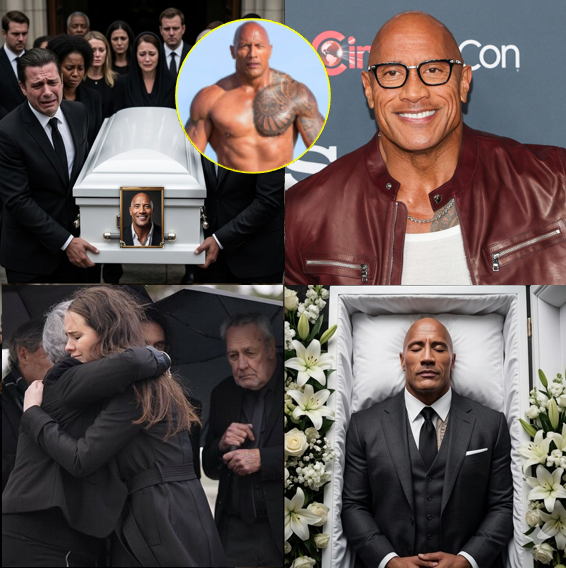
LATEST: 30 minutes ago, Farewell to a legend… Dwayne Johnson – the man who devoted his youth to entertainment and storytelling. Thank you for the wonderful memories you left behind.

A Silence That Feels Impossible
There are some names that seem larger than time itself. Names that carry the energy of stadium lights, roaring crowds, and the comfort of familiar laughter echoing through living rooms across the world. Dwayne Johnson was one of those names.

And now, as the world pauses to reflect on the extraordinary journey of the man millions came to know simply as “The Rock,” there is a strange stillness in the air. A silence that feels unfamiliar.
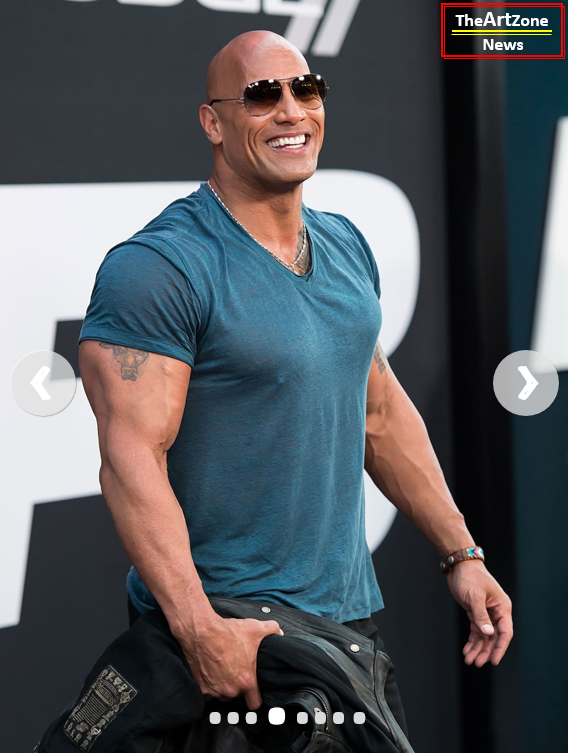
For decades, he stood at the intersection of strength and warmth — a towering figure whose charisma could fill wrestling arenas, movie theaters, television screens, and hearts alike. He was more than a performer. More than an athlete. More than a Hollywood icon.
He became a symbol of perseverance.

As tributes pour in from every corner of the globe, fans revisit old matches, replay beloved films, and share stories of how his words carried them through difficult days. Some remember his electrifying entrances beneath blinding arena lights. Others remember his infectious smile in interviews, the unmistakable cadence of his voice, or the surprising tenderness beneath his larger-than-life persona.
For many, saying goodbye to Dwayne Johnson feels like saying goodbye to an era itself.
Because some legends do not simply entertain us.
They grow up beside us.
From Humble Beginnings
Long before the blockbuster premieres and championship belts, before the fame and global recognition, there was a young boy moving from city to city, carrying uncertainty like invisible luggage.
Born in Hayward in 1972, Dwayne Johnson inherited a legacy both inspiring and burdensome. His father, Rocky Johnson, was a respected professional wrestler. His maternal grandfather, Peter Maivia, was a revered figure in Polynesian wrestling culture. Wrestling was in his blood, but so were hardship and instability.
The family struggled financially for years. There were times when eviction notices appeared on their door. Times when dreams seemed distant and survival took priority. Johnson would later speak openly about watching his mother cry under the weight of financial pressure — moments that shaped the fierce determination he carried throughout his life.
As a teenager, he battled anger and uncertainty, often feeling adrift. Yet sports became his refuge. Football gave him discipline. Structure. Hope.
At the University of Miami, he became part of a national championship-winning football team. For a moment, it appeared his future would unfold in the world of professional athletics. But injuries ended that dream abruptly.
Many would have broken under the disappointment.
Johnson rebuilt himself from it.
Years later, he would recall having only a few dollars in his pocket after his football aspirations collapsed — a memory that eventually inspired the name of his production company, Seven Bucks Productions. The story became part of his mythology not because it sounded dramatic, but because it was painfully human.
He knew what it meant to lose direction.
And he knew how to rise again.
Crafting a New Kind of Hero
When Dwayne Johnson entered professional wrestling in the mid-1990s, few could have predicted the cultural storm he would become.
At first, audiences resisted him. His original persona — clean-cut, smiling, endlessly cheerful — felt manufactured to some fans. Crowds booed. Chanted against him. Rejected him.
Then something changed.
Instead of fighting the criticism, Johnson transformed it into fuel. Reinventing himself as “The Rock,” he emerged with razor-sharp wit, unmatched confidence, and a magnetic stage presence that electrified arenas worldwide.
The swagger. The raised eyebrow. The unforgettable catchphrases.
He was theatrical without losing authenticity.
In an age filled with exaggerated characters, The Rock felt startlingly real.
Inside the squared circle of WWE, he became one of the defining faces of an entire generation. Rivalries with icons such as Stone Cold Steve Austin, Triple H, and The Undertaker became modern mythology for millions of fans.
But what separated Johnson from many of his contemporaries was not merely charisma.
It was rhythm.
He understood performance as music. Every pause. Every glance. Every grin before delivering a devastating line to the crowd. He could command thousands with a single sentence.
He made people believe entertainment could still feel communal — joyous, loud, alive.
And then, astonishingly, he conquered another world entirely.
Hollywood.
The Pain Behind the Smile
Fame often disguises exhaustion.
Behind the confidence and unstoppable work ethic was a man who endured years of physical punishment. Wrestling left scars that cameras rarely lingered on. Torn muscles. Lingering injuries. Endless rehabilitation.
Even in film, Johnson became known for punishing schedules and relentless discipline. Early mornings in the gym. Back-to-back productions. Constant travel. Public appearances. The burden of remaining “The Rock” at all times.
There were emotional battles too.
Johnson spoke candidly over the years about experiencing depression, particularly during moments of professional uncertainty and personal heartbreak. His willingness to discuss mental health openly resonated deeply with fans who had spent years seeing him as seemingly invincible.
That honesty changed lives.
Because when someone who appears indestructible admits vulnerability, others suddenly feel less alone.
He became proof that strength is not the absence of pain.
It is the courage to continue despite it.
A Global Force of Popular Culture
Few entertainers have ever bridged as many worlds as Dwayne Johnson.
Professional wrestling legend. Action star. Comedic actor. Producer. Entrepreneur. Motivational figure.
By the 2010s, he had become one of the most recognizable faces on Earth. Films like Fast & Furious Presents: Hobbs & Shaw, Jumanji: Welcome to the Jungle, Moana, and Black Adam transformed him into a worldwide box office phenomenon.
Yet audiences connected with him for reasons beyond spectacle.
He carried a rare accessibility.
Despite immense fame, Johnson projected the energy of someone who still remembered every struggle that came before success. His interviews often felt conversational rather than distant. Fans admired his discipline, but they loved his humanity.
Children saw him as a hero.
Adults saw him as proof that reinvention was possible.
Across cultures and generations, he became a universal symbol of resilience.
A Cultural Bridge
Dwayne Johnson’s identity mattered deeply to millions.
Proud of both his Black Nova Scotian heritage through his father and his Samoan heritage through his mother, he embraced cultural representation with sincerity and visibility. He frequently honored his Polynesian roots publicly, celebrating traditions, tattoos, family values, and ancestral pride.
For many Pacific Islander communities, his success carried enormous emotional significance.
He was not merely famous.
He was seen.
Johnson also dedicated substantial time and resources to charitable efforts, supporting children’s hospitals, disaster relief campaigns, veterans, and mental health initiatives. Friends and colleagues often described acts of generosity that never reached headlines — private gestures offered without expectation of publicity.
To younger performers entering wrestling or film, he became a mentor figure. Someone who understood the loneliness of ambition and the pressure of public expectation.
He did not simply achieve success.
He widened the doorway for others.
Farewell to a Tireless Performer
Every performer eventually faces the moment when the lights dim.
For Dwayne Johnson, that moment carries extraordinary emotional weight because his career always seemed fueled by inexhaustible momentum. He worked as though rest itself were impossible.
And perhaps that is why this farewell feels so difficult.
Throughout interviews over the years, Johnson often returned to one guiding philosophy: gratitude. Gratitude for struggle. Gratitude for fans. Gratitude for opportunity.
He once reflected that success meant nothing without the ability to uplift others along the journey.
That belief defined him.
Even at the height of global fame, he continued speaking directly to fans with remarkable openness. Whether through heartfelt messages, humorous videos, or motivational reflections, he maintained a connection that felt personal in an age increasingly defined by distance.
Now, as audiences revisit his life’s work, those words carry new resonance.
Not because they belonged to a superstar.
But because they belonged to a man who never forgot where he came from.
Timeless Memories on Screen
The legacy of Dwayne Johnson lives inside countless unforgettable moments.
The roar of an arena exploding as his entrance music hit.
The grin before delivering a perfectly timed comeback.
The emotional vulnerability hidden beneath massive action sequences.
Children laughing at the mischievous warmth of Maui in Moana.
Audiences cheering during explosive scenes in the Fast Five era of the Fast saga.
Wrestling fans remembering battles that felt less like scripted entertainment and more like epic theater.
His influence stretched beyond performance style. Modern entertainers increasingly embraced the blend of athleticism, humor, authenticity, and emotional transparency that Johnson embodied naturally.
He proved toughness did not require cruelty.
That masculinity could include compassion.
That strength could smile.
The Man Behind the Legend
Those closest to Dwayne Johnson often speak not first about fame, but about kindness.
Crew members described him remembering names. Checking on families. Staying late for conversations. Supporting colleagues quietly behind the scenes.
Friends recalled his humor — playful, relentless, deeply human.
Family remained central to his identity throughout every chapter of success. He frequently spoke about honoring his parents’ sacrifices and ensuring future generations would never experience the instability he once knew.
Despite global superstardom, he often appeared most comfortable discussing ordinary moments: cooking meals, spending time with loved ones, reflecting on fatherhood.
Perhaps that balance explains why audiences trusted him so deeply.
He never seemed to disappear entirely into celebrity.
The humanity remained visible.
A Legacy That Will Endure
Legends survive because they become part of collective memory.
And Dwayne Johnson’s legacy has already embedded itself into modern culture in ways that will endure for generations. Young wrestlers still study his promos. Actors continue learning from his crossover success. Fans revisit old interviews not only for entertainment, but for encouragement.
His journey carried universal themes.
Failure. Reinvention. Discipline. Gratitude.
Hope.
There will be new stars. New blockbusters. New icons.
But there will never be another quite like The Rock.
Because his impact was not built solely on achievements.
It was built on emotional connection.
The sense that beneath the fame stood someone who understood struggle — and wanted others to believe they could overcome theirs too.
Goodbye, But Never Forgotten
As the world reflects on the extraordinary journey of Dwayne Johnson, there is sadness, certainly. But there is gratitude too.
Gratitude for the laughter.
For the unforgettable performances.
For the inspiration carried through countless arenas and cinema screens.
And for the reminder that greatness is often forged not in triumph alone, but in resilience after heartbreak.
Though the curtain slowly falls on one of the most remarkable entertainment careers of the modern era, the spirit he shared with the world remains unmistakably alive — in roaring crowds, in cinematic memories, in families gathered around televisions, and in dreamers refusing to surrender after failure.
Because true legends never vanish entirely.
They echo.
They inspire.
They endure.
He may have stepped away from the spotlight, but his spirit will forever stand tall beneath it.
One Comment on “Farewell to a legend… Dwayne Johnson(The Rock) …”