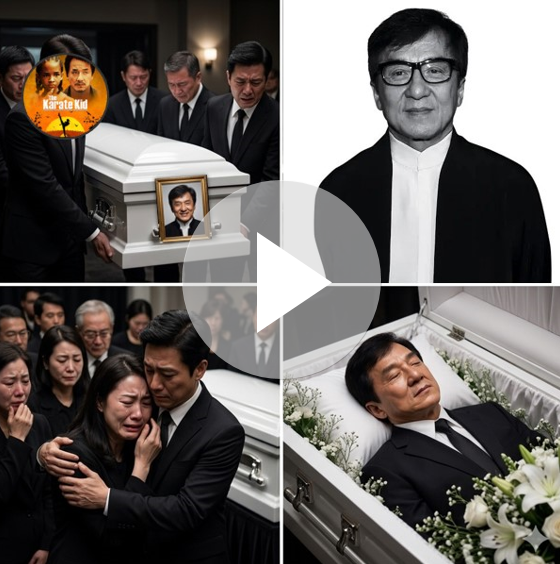
LATEST: 30 minutes ago, Farewell to a legend… Jackie Chan – the man who devoted his youth to cinema. Thank you for the wonderful memories you left behind.

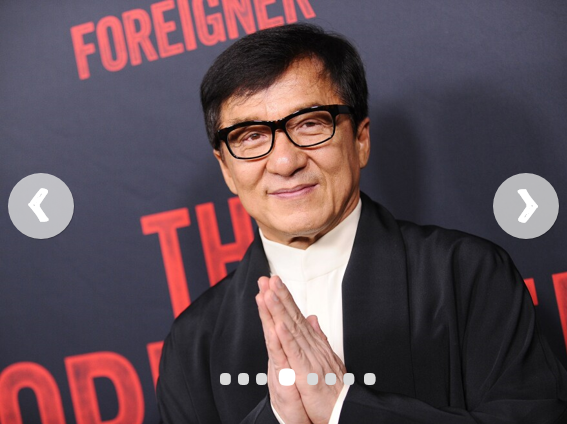
And though time moves relentlessly forward, some spirits never truly leave the stage.
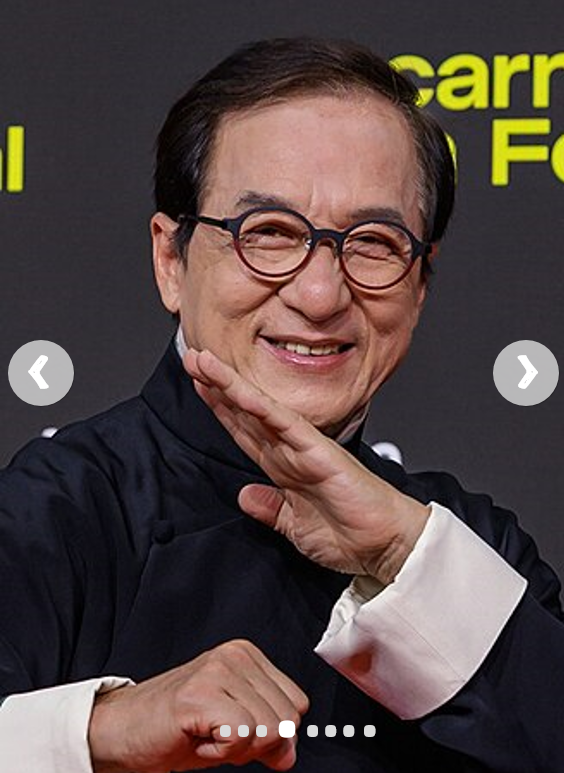
From Humble Beginnings
Long before stadium premieres and Hollywood acclaim, Jackie Chan’s life began in modest circumstances in Hong Kong in 1954. Born Chan Kong-sang to parents who worked tirelessly to survive, his early years were shaped by discipline, hardship, and uncertainty. His father worked as a cook and handyman, while his mother took on domestic jobs. They were ordinary people raising a child in a city constantly changing around them.
As a young boy, Jackie was energetic to the point of exhaustion. Restless. Curious. Forever climbing, jumping, testing limits. Recognizing both his intensity and the need for opportunity, his parents enrolled him in the rigorous China Drama Academy under the strict guidance of master Yu Jim-yuen.
The training was brutal.
Children woke before dawn. Endless hours of martial arts, acrobatics, singing, dance, and performance consumed their days. Mistakes were punished harshly. Injuries were common. Childhood itself often felt distant. Yet inside those difficult years, something extraordinary was forming.
The young Jackie learned not only discipline but survival. He discovered rhythm, timing, body control, and the sacred relationship between performer and audience. Most importantly, he learned how to fall — and how to stand back up.
That lesson would define his entire life.
While others sought perfection, Jackie embraced imperfection. He stumbled. Missed cues. Took painful hits. But audiences connected with him precisely because he felt human. Unlike untouchable action heroes, he looked vulnerable. Afraid, even. Yet he kept moving forward.
The world would eventually fall in love with that honesty.
Crafting a Style That Changed Cinema
By the 1970s, martial arts films had become globally popular, largely shaped by the shadow of Bruce Lee. Many studios searched desperately for another stoic warrior, another unstoppable fighter. But Jackie Chan understood something important: he could never replace Bruce Lee.
So he became himself instead.
That decision changed action cinema forever.
Where others fought with icy precision, Jackie fought with panic, improvisation, and humor. Chairs, ladders, clocks, tables, bicycles — everyday objects became instruments of choreography in his hands. His action scenes resembled dance performances mixed with silent-era comedy. Influences from Charlie Chaplin and Buster Keaton merged seamlessly with martial arts mastery.
Films like Drunken Master introduced audiences to a new type of hero: mischievous, flawed, playful, and wildly inventive. His movements carried musical rhythm. Every fight scene told a story. Every fall mattered.
Then came classics that would cement his legend forever — Police Story, Project A, Armour of God, and later the internationally beloved Rush Hour series.
Audiences watched in disbelief as Jackie slid down exploding poles wrapped in electric lights, dangled from helicopters, jumped between skyscrapers, and performed stunts so dangerous they still inspire filmmakers decades later.
But the true magic was never merely the danger.
It was joy.
Even during chaos, Jackie Chan made audiences smile.
The Pain Behind the Art
Behind the laughter existed extraordinary sacrifice.
Over the course of his career, Jackie Chan endured injuries that would have ended most performers’ careers many times over. Broken bones. Damaged vertebrae. Dislocated shoulders. Burn injuries. Skull fractures. Hearing loss. Countless surgeries.
One near-fatal accident during the filming of Armour of God nearly claimed his life after he fell from a tree and fractured his skull. A permanent hole remained in his head, hidden beneath his hair for the rest of his career.
Yet he returned to work.
Again and again.
Partly because filmmaking was his passion. Partly because he believed audiences deserved authenticity. Jackie performed his own stunts not to prove invincibility but because he respected viewers deeply enough to give everything he had.
There is something profoundly moving about that dedication. The willingness to risk comfort, safety, even life itself, for the sake of art and entertainment.
The outtakes shown during the credits of many Jackie Chan films became legendary for a reason. They revealed the truth behind the spectacle. The bruises were real. The fear was real. The pain was real.
And somehow, so was the smile afterward.
Global Recognition and Cultural Influence
By the 1990s, Jackie Chan was no longer only a star in Asia. He had become an international phenomenon.
Hollywood initially struggled to understand his style. Western action cinema often prioritized brute force and fast editing. Jackie’s choreography relied on clarity, timing, and physical storytelling. But eventually, audiences embraced him wholeheartedly.
Films such as Rumble in the Bronx and Rush Hour introduced him to new generations around the world. His chemistry with Chris Tucker became iconic, blending martial arts brilliance with comedic charm in a way that transcended language and culture.
Jackie achieved something rare in entertainment history: he became universally recognizable without abandoning his identity. He carried the spirit of Hong Kong cinema onto the global stage while remaining unmistakably himself.
Awards and honors followed. Lifetime achievement recognitions. International film festival tributes. Finally, in 2016, he received an honorary Oscar from the Academy of Motion Picture Arts and Sciences for his extraordinary contribution to cinema.
The moment felt overdue.
The audience rose in applause not only for a movie star but for a man who had redefined what action filmmaking could be.
A Cultural Bridge
More than an entertainer, Jackie Chan became a symbol of connection between East and West.
At a time when cultural barriers often separated industries and audiences, Jackie’s films created shared experiences. A child in New York laughed at the same scene as a family in Bangkok or a teenager in Paris. His humor was physical, emotional, universal.
He also devoted substantial energy to philanthropy and mentorship. Through charitable foundations and humanitarian work, he supported disaster relief, education initiatives, wildlife protection, and healthcare programs. Younger actors frequently described him as generous with advice, protective on set, and deeply committed to preserving the craft of stunt performance.
Many modern action stars owe part of their creative DNA to Jackie Chan’s influence. His choreography reshaped how filmmakers approached movement, realism, and comedic timing in action sequences.
Even today, echoes of his style appear everywhere.
A sliding kick across a table. A desperate scramble through collapsing scenery. A comedic pause in the middle of combat.
The fingerprints remain unmistakable.
Farewell to a Tireless Performer
There comes a moment in every artist’s journey when the body begins whispering truths the spirit refuses to hear.
For Jackie Chan, that moment arrived gradually.
Years of injuries accumulated. Recovery became slower. The demands of action filmmaking grew heavier. Yet even as age transformed his relationship with physical performance, his passion for storytelling remained visible in every interview, every public appearance, every warm interaction with fans.
In recent years, Jackie often reflected on legacy rather than spectacle. He spoke about gratitude. About survival. About appreciating the long and unpredictable road he had traveled.
“I am lucky,” he once said in essence through many interviews over the years. Lucky to have lived this life. Lucky to have entertained people. Lucky to still be standing.
Those words now carry deeper emotional weight.
Because behind the fame was a man who understood how fragile life truly is.
Timeless Memories on Screen
Some images will live forever.
Jackie hanging from the clock tower in Project A.
The shopping mall pole sequence in Police Story.
The drunken boxing movements in Drunken Master.
The comedic chaos of Rush Hour.
The breathtaking stunts performed with almost reckless sincerity.
Entire generations remember gathering around televisions late at night, rewinding VHS tapes repeatedly just to understand how he survived certain scenes. His films became rituals among friends and families. Shared laughter. Shared amazement.
And unlike many stars who felt distant, Jackie seemed approachable. Human. Audiences sensed the effort behind every performance. They rooted for him because they saw struggle inside the spectacle.
That emotional connection cannot be manufactured.
It can only be earned.
The Man Behind the Legend
Friends and collaborators often describe Jackie Chan with words rarely associated with global superstardom: humble, hardworking, playful, generous.
Crew members recalled him staying long after filming ended to thank stunt performers personally. Younger actors spoke about receiving encouragement when they felt intimidated. Fans who met him frequently remembered his warmth more than his fame.
There was humor in him even away from cameras. A childlike energy. A willingness to laugh at himself.
Yet there was also loneliness at times — the inevitable cost of decades spent chasing perfection through relentless work. Fame demands sacrifices invisible to audiences. Relationships strain. Privacy disappears. Exhaustion becomes ordinary.
Still, Jackie carried himself with remarkable resilience.
Perhaps because he never forgot where he came from.
Never forgot the disciplined child training endlessly in Hong Kong. Never forgot the years before success arrived. Never forgot how fragile opportunity can be.
A Legacy That Will Endure
Legends do not disappear when the lights dim.
They remain in movement. In memory. In inspiration passed quietly from one generation to the next.
Young filmmakers studying action choreography will continue analyzing Jackie Chan’s timing and spatial genius for decades to come. Aspiring stunt performers will marvel at his courage. Audiences yet unborn will discover his films and feel the same astonishment viewers experienced forty years earlier.
Because great art survives time.
And Jackie Chan’s greatest achievement was never simply performing dangerous stunts. It was reminding people that persistence matters. That failure can become comedy. That vulnerability can become strength.
He taught the world how to fall gracefully.
And how to rise smiling afterward.
Conclusion: Goodbye, But Never Forgotten
Tonight, somewhere in the world, an old Jackie Chan film is playing on a flickering screen. Someone is laughing for the first time at a joke decades old. Someone else is watching with tears in their eyes, remembering childhood, family, simpler days.
That is legacy.
Not statues. Not awards. Not headlines.
Memory.
The kind that lives quietly inside people long after the final scene fades to black.
As audiences say farewell to a tireless performer, they also celebrate something enduring: the joy he gave freely to the world. Through pain and perseverance, through impossible stunts and heartfelt laughter, Jackie Chan created a cinematic language understood by millions.
And though the curtain slowly falls on an extraordinary chapter in film history, his spirit remains stitched into the fabric of cinema forever.
He may have stopped leaping from rooftops, but his spirit will forever soar.